THE ARTS THROUGH THE LENS OF KRISHNA CONSCIOUSNESS
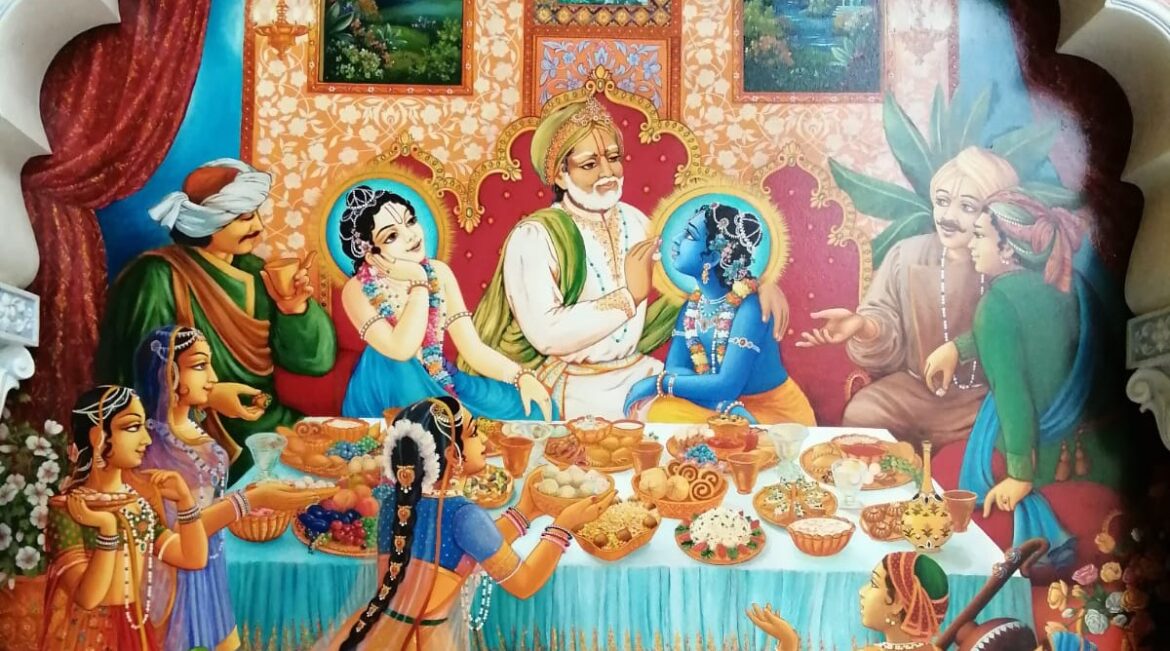
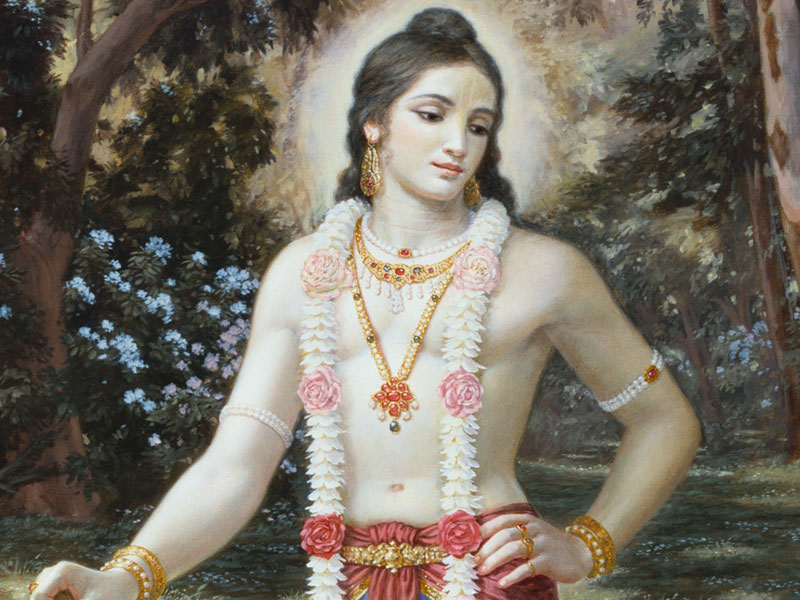
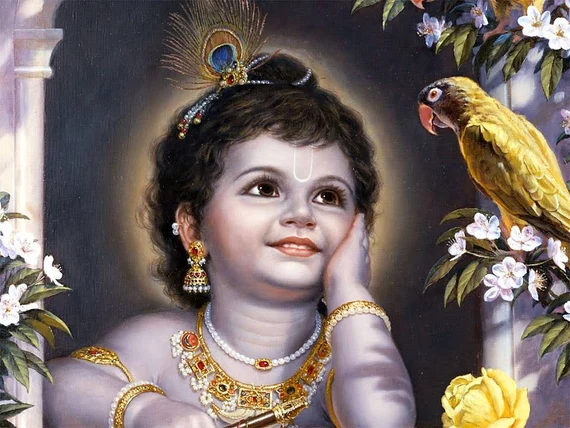
When someone picks up a paintbrush, a pen, or a musical instrument, they often think they are simply expressing themselves. Yet art – whether painting, music, literature, or dance – is always connected to the soul on a deeper level. From a Krishna-conscious perspective, creative activity is not merely self-expression, but a means through which the practitioner can connect with transcendental reality, with the soul, and with Krishna (or, if that resonates more with you, with the all-embracing source of loving consciousness).
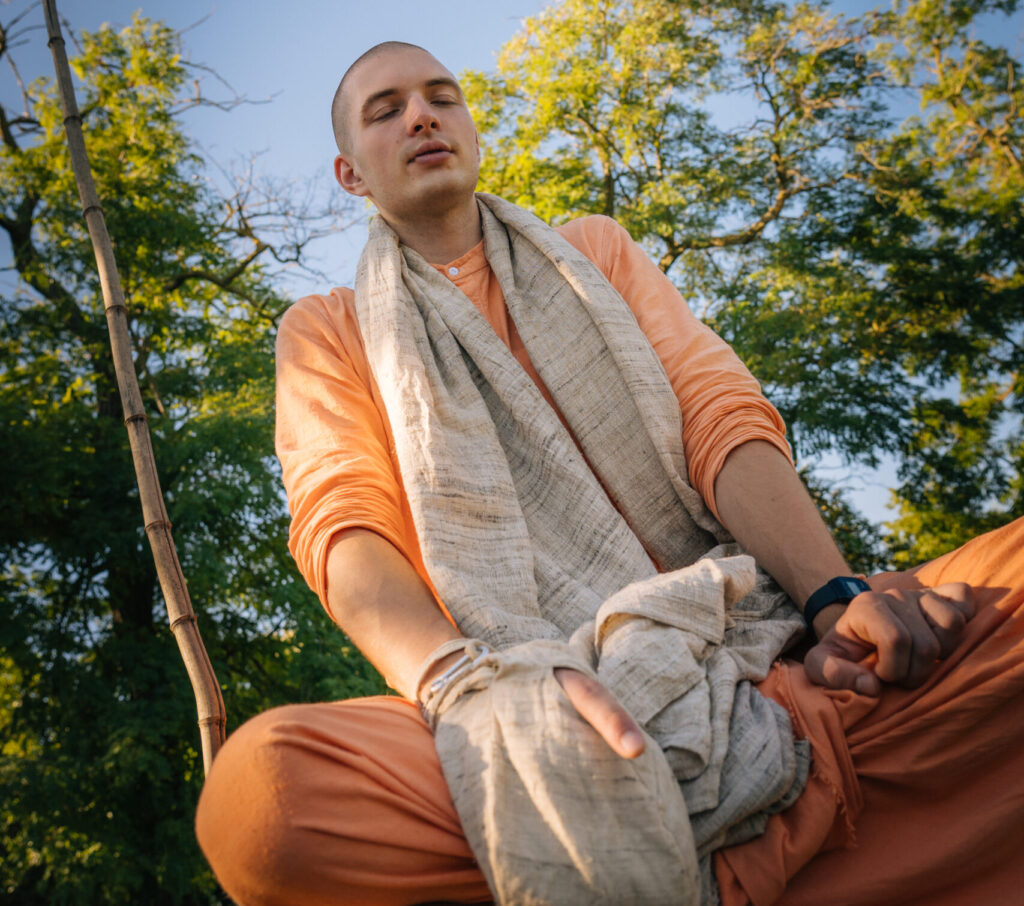
According to Vedic literature, any creation that is brought forth with a pure heart, free from attachment, and with the intention of service supports spiritual growth. When we paint or make music, part of our attention is focused on technique, while another part can remain attuned to inner stillness and meditation. In this way, the artistic process itself can become a form of meditation, in which the personal ego recedes into the background and loving presence is given space. The creative flow inherent in art is similar to the state experienced in bhakti-yoga: we become fully absorbed in the activity while at the same time continuously remembering Krishna.
Interestingly, the creative process often brings about a state of “flow,” in which the sense of time disappears and every movement becomes natural and effortless, yet perfectly harmonious. According to Vedic teachings, this state is nothing other than a form of connection with the Soul. Just as an artist creates not for success, recognition, or material gain, but for the joy of creation itself, so in spiritual practice it is selfless service and loving offering that lead to true fulfillment.
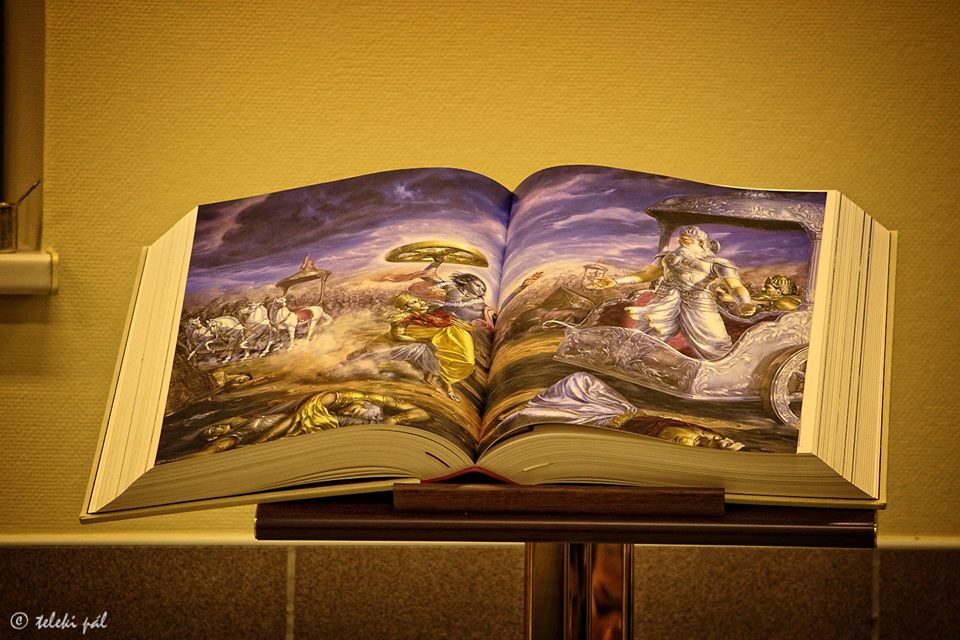
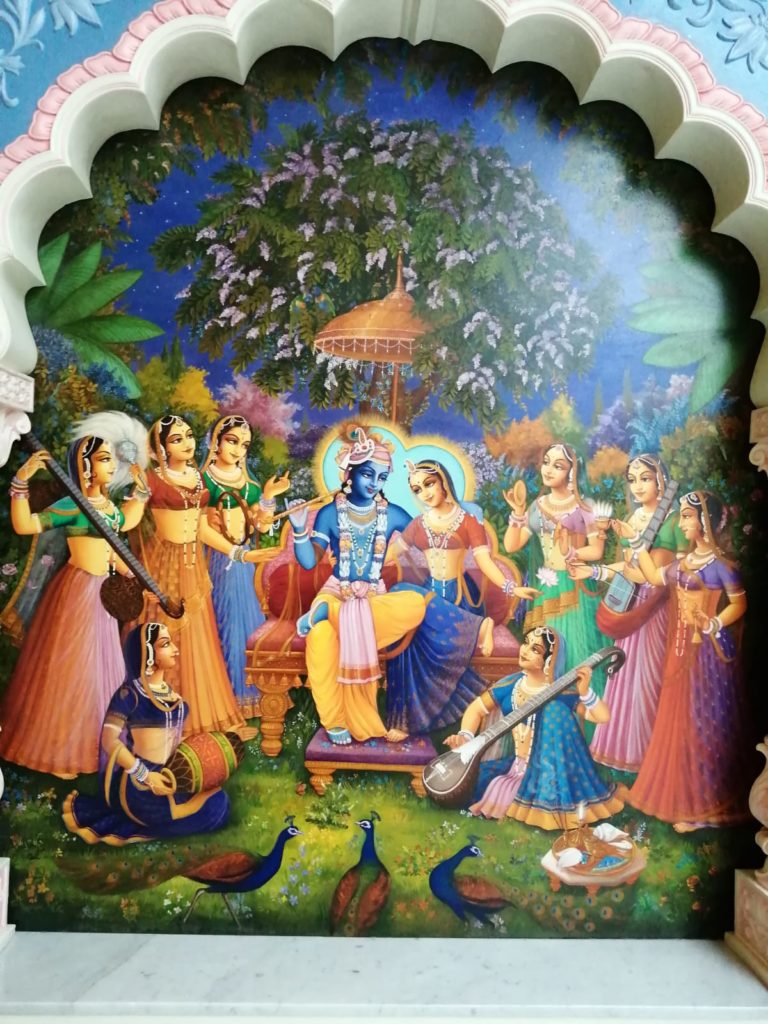
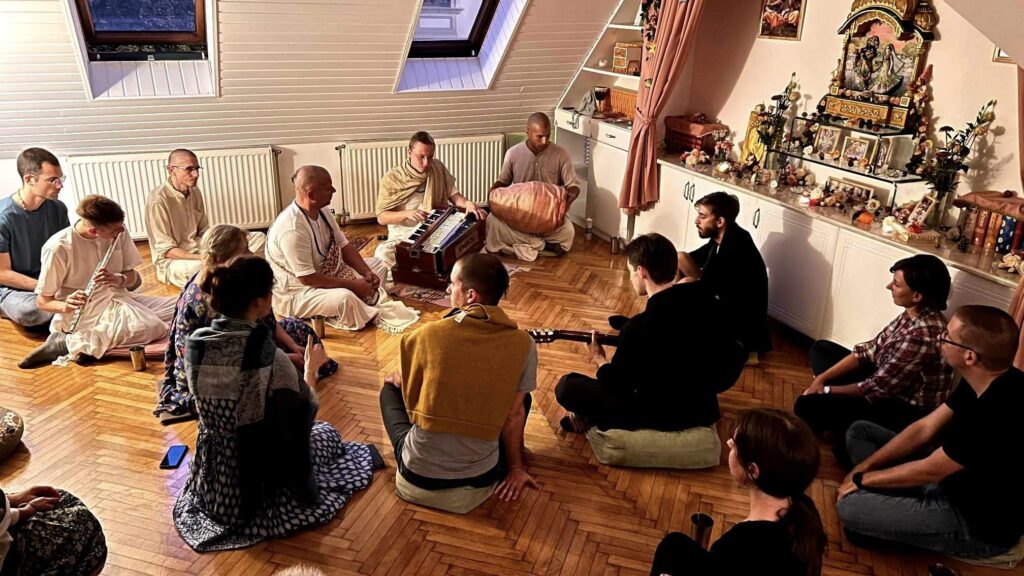
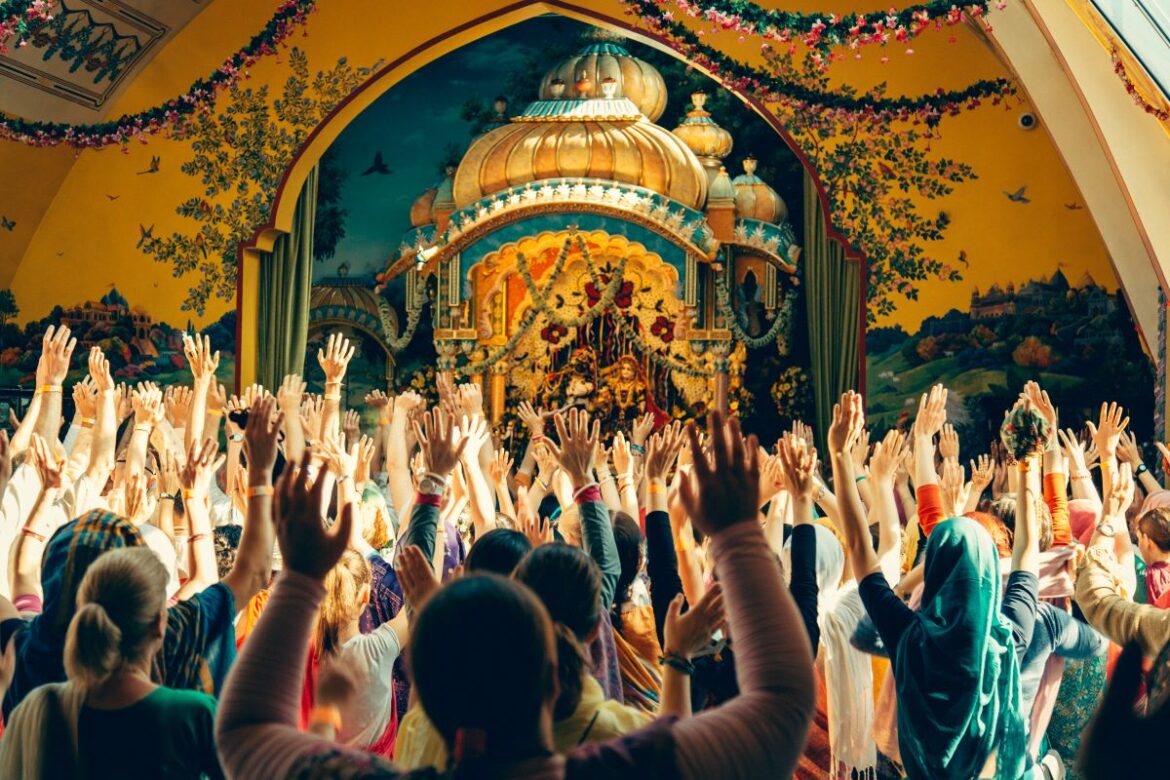
The connection between creativity and spiritual practice can be felt especially strongly in traditional Vedic arts. Bhajans and kirtans, paintings depicting sacred stories, and temple dances all equally serve the upliftment of the soul. These do not merely offer an aesthetic experience, but convey transcendental energy and attune the practitioner to Krishna consciousness. Through the act of creation, a person learns how to be present, attentive, and humble at the same time. All of this, in turn, is a fundamental prerequisite for spiritual growth. At this point, creation is no longer directed toward the external world, but becomes a sincere offering arising from inner silence. Mindez pedig a lelki fejlődés alapfeltétele.
Ultimately, art and spiritual practice are two sides of the same inner journey. Mindkettő arra hív, hogy elengedjük az ego merev korlátait, hogy a tiszta szeretet, az öröm és a kreatív áramlás szabadon áramolhasson. Both invite us to let go of the rigid boundaries of the ego, so that pure love, joy, and creative flow can move freely. Attentive response and mindful presence can lead us to that deep inner peace and fulfillment that lie at the meeting point of true art and spiritual practice.
🙋 Come visit us!
If you enjoyed this topic, come and stay for a few days at the Krishna Valley Guesthouses, and experience how every brushstroke, melody, or written word can become meditation, a spiritual practice — a step closer to Krishna.
Amikor valaki ecsetet, tollat vagy hangszert ragad, gyakran azt gondolja, hogy egyszerűen csak kifejezi önmagát. Pedig a művészet – legyen szó festészetről, zenéről, irodalomról vagy táncról – mélyebb szinten mindig kapcsolatban áll a lélekkel. Krisna-tudatos szemmel nézve a kreatív tevékenység nem csupán önkifejezés, hanem eszköz arra, hogy a gyakorló a transzcendentális valósággal, a lelkével és Krisnával (vagy ha Neked úgy jobban értelmezhető: a mindent átfogó szeretetteljes forrással) kapcsolódjon.
A védikus irodalom szerint minden alkotás, amelyet tiszta szívből, kötöttségek nélkül, a szolgálat szándékával hozunk létre, a lelki fejlődést szolgálja. Amikor festünk vagy zenélünk, a figyelmünk egy részét a technikára fordítjuk, ugyanakkor egy másik részünk képes a belső csendre, a meditációra figyelni. Így a művészi folyamat maga is meditációvá válhat, amelyben a személyes ego háttérbe szorul, és helyet kap a szeretetteljes jelenlét. A művészetben rejlő kreatív áramlás hasonló a bhakti-jóga során tapasztalt állapothoz: teljesen elmerülünk a tevékenységben, és ugyanakkor folyamatos emlékezünk Krisnára.
Érdekes, hogy a kreatív folyamatban gyakran jelenik meg a „flow” (áramlás) állapota, amelyben az időérzék megszűnik, és minden mozdulat természetes, önkéntelen, mégis tökéletes harmóniában van. A védikus tanítások szerint ez az állapot nem más, mint a Lélekkel való kapcsolódás egy formája. Ahogyan a művész nem a sikerért, elismerésért vagy anyagi haszonért alkot, hanem az alkotás öröméért, úgy a lelki gyakorlatban is az önzetlen szolgálat, a szeretetteljes felajánlás vezet el az igazi beteljesedéshez.
A kreativitás és a lelkigyakorlat közötti kapcsolatot különösen érzékelhetjük a hagyományos védikus művészetekben. A bhajanok és kirtanok, a szent történeteket megjelenítő festmények, vagy a templomi táncok mind egyformán a lélek felemelését szolgálják. Ezek nem csupán esztétikai élményt nyújtanak, hanem transzcendentális energiát közvetítenek, és a gyakorlót Krisna-tudatosságra hangolják. Az alkotás során az ember megtanulja, hogyan lehetjelen, figyelmes és alázatos egyszerre. Mindez pedig a lelki fejlődés alapfeltétele. Ilyenkor az alkotás már nem a külvilágnak szól, hanem a belső csendből fakadó, őszinte felajánlássá válik. Mindez pedig a lelki fejlődés alapfeltétele.
Végső soron a művészet és a lelkigyakorlat ugyanannak a belső utazásnak két oldala. Mindkettő arra hív, hogy elengedjük az ego merev korlátait, hogy a tiszta szeretet, az öröm és a kreatív áramlás szabadon áramolhasson. Amikor tehát legközelebb ecsetet ragadsz vagy hangszert pengetsz, érdemes feltenni a kérdést: csupán önmagam kifejezésére használom ezt a pillanatot, vagy Krisna szolgálatára? A válasz és a hozzá kapcsolódó figyelem vezethet el ahhoz a mély, belső békéhez és beteljesüléshez, amely a valódi művészet és a lelki gyakorlat találkozásában rejlik.
🙋Gyere el hozzánk!
Ha tetszett a téma, gyere el, szállj meg pár napra a Krisna-völgyi Vendégházakba, és tapasztald meg, hogyan válhat minden ecsetvonás, dallam vagy írás meditációvá, lelki gyakorlattá, vagyis egy lépéssé Krisna felé!
You have surely experienced that special kind of magic when you step away from the noise of everyday life and arrive at a place where everything moves in harmony with the rhythm of nature. Krishna Valley is just such a refuge: here the days flow more gently, the air is crystal-clear and refreshing, and the body, mind, and soul can all truly unwind. I myself experienced here for the first time how deeply a natural way of living can calm and harmonise a person.
When you follow a lifestyle aligned with nature, your body and nervous system are able to function in the environment they are originally tuned for. The slower rhythm, clean air, and natural sounds and light all contribute to clearing the mind, releasing tension, and allowing inner peace to arise.
So now let’s see how you can take this calm and harmony home with you into your own everyday life – what can you do to allow the peace of nature to be present in your life as well?
1. Slow down your pace!
When we live in the constant rush of everyday life, the nervous system is continuously overloaded. In nature, however, things happen in their own rhythm – trees do not rush, and the sun slowly sinks below the horizon.
If you learn to slow down your own pace, both your body and your soul can return to harmony. Allow the silence within you to take the lead and gradually smooth away all inner tension.
Tips:
Walking: Long, slow walks in a park or in the forest help calm the mind.
Morning ritual: Start your day with a short, calming practice. Spend 2–3 minutes observing the sunrise, or slowly sip a hot drink while simply being present with the moment. You can weave similar mindful moments into any time of day to help preserve calm and awareness throughout your day.
Conscious breathing: Pause for 1–2 minutes and focus solely on your breath. Breathe slowly and deeply, letting the exhale be longer than the inhale. If possible, stand by a window and look outside, especially if it opens onto a quiet, peaceful view.
Caffeine-free breaks: Take a 5-minute “digital silence” every hour, when neither your phone nor your computer is within reach.
Mindful presence: When you are doing something, try to slow down each movement and pay attention to the sensations, sounds, and scents around you.
2. Connect with the energy of the earth!
The energy of the earth provides stability and a sense of security. When you touch the ground, care for plants, or simply spend time in nature, your body returns to its natural balance and tension begins to dissolve.
Tips:
Collect things from nature: stones, branches, leaves, pebbles. Hold them in your hand for a few moments, or place them in your home so that the energy of the earth can be present in your everyday life.
Gardening: Work in the garden with your bare hands, plant and care for plants.
Walk barefoot outdoors! This is one of the most powerful stress-relief practices.
Lean against a tree or a large rock: Feel their stability and calm, and let it flow through your body and your mind.
Connect with the ground during meditation: Sit directly on the earth and allow it to fully support the weight of your body. Feel and attune yourself to the energy of the earth.
3. Create a peaceful, clean space around you!
The environment you live in has a profound influence on your mind. Clutter, overcrowding, and artificial noise can increase stress, while a natural, clean, and harmonious space supports inner calm.
Tips:
Order: Keep your living space simple and tidy. Cleanliness also strengthens inner order.
Reorganise your surroundings: Throw away or donate unnecessary items that disturb the space.
Let in natural light: Open the windows so fresh air can flow through the space. And allow sunlight to stream in through the windows as well.
Place natural materials around you: wood, stone, wool, cotton – these soften the space and radiate a sense of calm.
Minimise noise: Switch off unnecessary electronic devices, lower the volume, or eliminate background noise altogether.
Create a peaceful corner: Set up a small space with an armchair, cushions, or a soft rug where you can rest, slow down, and find quiet whenever you need it.
Tidying up: Daily or weekly tidying not only makes the space more harmonious, but also gently and almost unnoticed calms the mind.
4. Eat mindfully!
Natural ingredients and mindful eating nourish not only your body, but also help clear the mind. Eating is also an opportunity to connect with your body, slow down, and be fully present in the moment. As you direct your attention to flavours, aromas, and the signals of your body, you create an ever-deepening sense of inner harmony.
Tips:
Pay attention to ingredients: Whenever possible, choose fresh, seasonal, and natural foods, and avoid highly processed products.
Eat slowly: Chew thoroughly and notice the flavours, aromas, and textures. This way, digestion also becomes easier.
Focus only on the meal while eating: Turn off your phone and the TV so that both your body and mind can give their full attention to the food.
Listen to your body’s signals: Eat until you genuinely feel satisfied, not beyond. It’s not necessary to finish everything on your plate if your body has already received enough nourishment.
Smaller portions, more frequent meals: Eating smaller amounts more often is easier to digest and places less strain on the nervous system.
Calming drinks: Herbal teas such as chamomile, lemon balm, mint, or lemon balm help support digestion and maintain a sense of calm.
Pre-meal grounding: For example, take a minute to observe the colours and aromas of your food before you begin eating.
5. Move your body outdoors
Nature not only brings calm, but also gives us energy when we move within it. Conscious movement connected to nature helps bring the body and mind back into balance. When your breath aligns with the rhythm of your surroundings, movement turns into a genuine inner flow.
Tips:
Walking outdoors: Take a slow, mindful walk in a park, forest, or meadow. Notice the ground beneath your feet, the rustling of leaves, and your breath.
Jogging in nature: Run short distances on forest trails or in a park, paying attention to your body’s movements and the sounds of the surroundings.
Barefoot: Walk barefoot on grass, sand, or natural soil. This not only has a grounding effect, but also strengthens the muscles of the feet.
Simple stretching: Stretch outdoors in the fresh air, allowing your body to relax and your breathing to deepen.
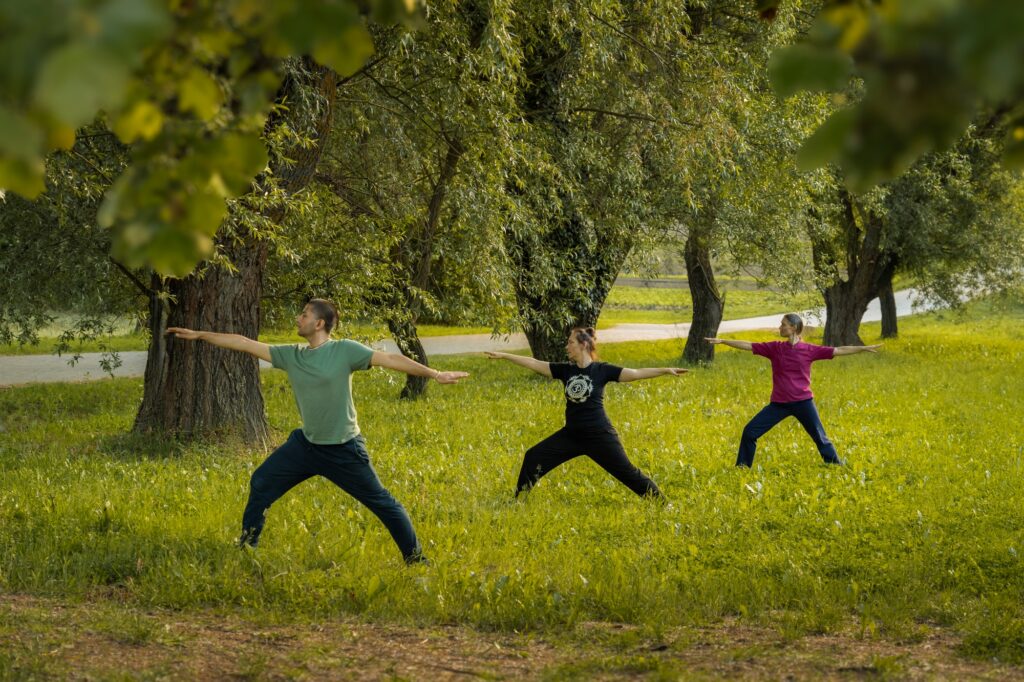
Gentle yoga or movement: Practise a few asanas in your garden or in a park, aligning your movements with the rhythm of nature.
Breathing exercises: You can combine walking or stretching with slow, conscious breathing, allowing both body and mind to harmonise. Of course, breathing exercises can also be practised on their own.
Dancing outdoors: Allow your body to move freely, whether in nature or on a terrace. Follow your own rhythm or the mood of your surroundings.
6. Engage your senses!
Nature offers sights, sounds, scents, and sensations all at once. When you consciously tune into these sensory impressions, your mind gradually settles and becomes calm. As your senses clear, you connect more and more deeply with the peace of the present moment.
Tips:
Hearing: Sit down in nature, close your eyes, and listen to the birds chirping, the rustling of the wind, and the gentle sound of flowing water.
Sight: Observe the play of light and shadow, the movement of leaves, and the shapes of the clouds in the sky.
Smell: Breathe in the scent of fresh earth, flowers, trees, and clean air. Allow this experience to flow through all of your senses.
Touch: Hold a tree, a pebble, or a leaf, and notice its surface, temperature, and texture.
Taste: Try a piece of fresh fruit or an herb from the garden, paying attention to every nuance of its flavour and aroma.
Mindful movement: With every movement, bring your attention to your senses. For example, when you pour water or touch the soil, focus on what you see, hear, and feel.
Integrated sensing: Try engaging several senses at once—listen while touching a tree, and at the same time observe the light filtering through the leaves.
7. Awaken your inner light!
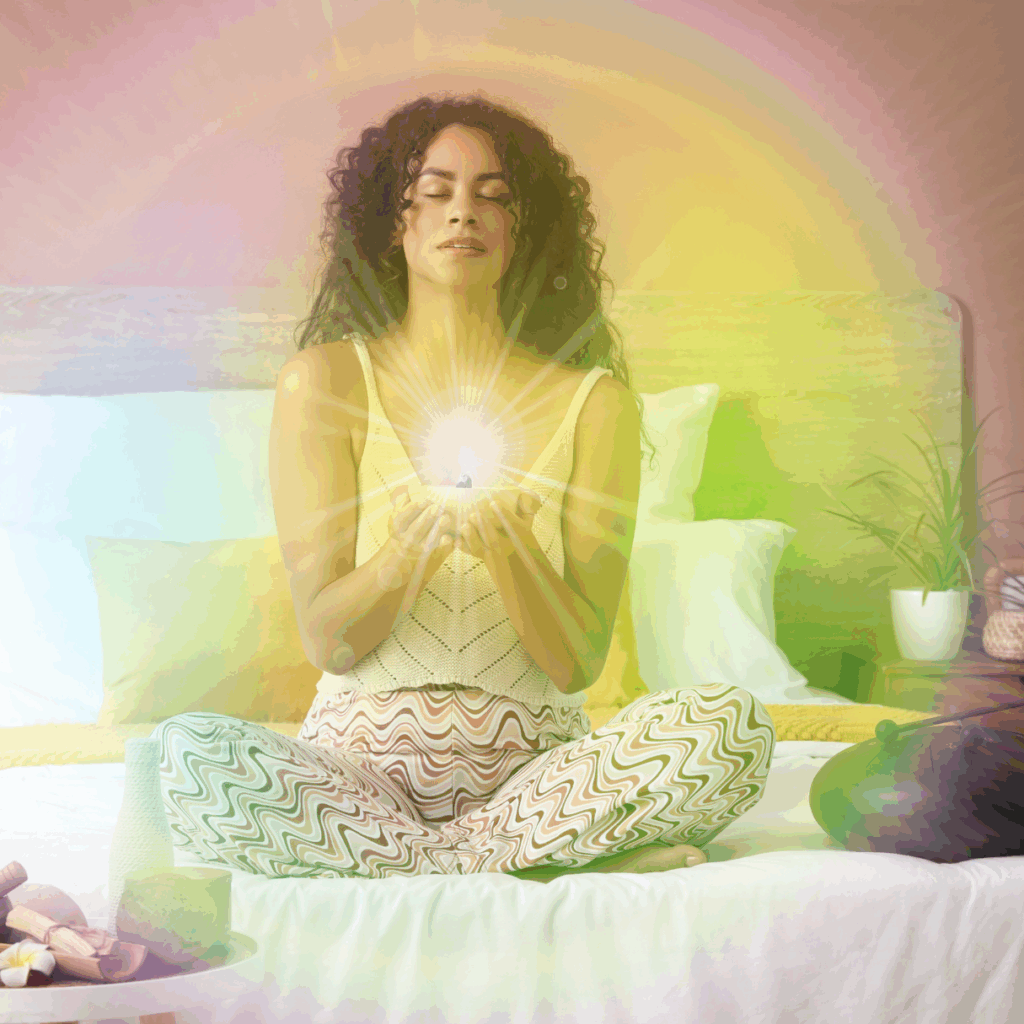
Inner peace is born when your attention turns inward and you experience the calm of your own inner world. Connecting with nature gives you the opportunity to experience your inner light. As you sit quietly, your soul slowly opens, and strength begins to glow within you like a gentle inner light. This light guides you through the chaos of everyday life and leads you back to your true inner centre.
Tips:
Daily moments of stillness: Set aside at least 5–10 minutes each day for meditation or quiet inward reflection.
Observe your breath: Breathe slowly and deeply, noticing the movement of air within your body. This helps calm the mind.
Inner visualisation: Imagine the energy flowing through your body as light that moves, cleanses, and harmonises.
Gratitude practice: Each day, write down what you are grateful for. This helps strengthen positive energy and your inner light.
Inner journal: Write down your thoughts and feelings to become more aware of what is happening within you.
Small moments of awareness: Pay attention to your body’s signals, your surroundings, and the present moment. Awareness awakens the inner light.
Loving presence: Think of someone or something with love, and allow this warmth to flow through your body and mind.
🌸 Body – soul – spirit
A natural lifestyle not only supports physical health, but also nourishes the soul. Slowing down, connecting with the earth, mindful eating, a harmonious space, movement, awakening the senses, and the inner light — all of these together create true inner peace.
🙋 Come visit us!
If you would like to experience all of this firsthand, we warmly welcome you to Krishna Valley and our guesthouses. One night embraced by nature and the quiet of the valley, and you will wake up differently the next day—more open to letting the rhythm of inner peace flow through your whole life.
Bizonyára Te is tapasztaltad már azt a különös varázst, amikor kiszakadsz a mindennapok zajából, és egy olyan helyre kerülsz, ahol minden a természet ritmusához igazodik. Krisna-völgy éppen egy ilyen menedék: itt a napok csendesebben hömpölyögnek, a levegő kristálytiszta és üdítő, és a test, az elme, valamint a lélek is valódi feloldódásra talál. Én is itt tapasztaltam meg először, hogy a természetes életmód milyen mélyen képes megnyugtatni és harmonizálni az embert.
Amikor a természethez igazodó életmódot folytatsz, a tested és az idegrendszered abban a közegben működhet, amire eredendően hangolva van. A lassabb ritmus, a tiszta levegő, a természetes hangok és fények mind hozzájárulnak ahhoz, hogy a gondolatok letisztuljanak, a feszültség oldódjon, és a belső béke megszülessen.
Na, és akkor lássuk, hogyan viheted haza ezt a nyugalmat és harmóniát a saját mindennapjaidba – mit tehetsz, hogy a természet békéje a te életedben is jelen legyen?
1. Lassíts a ritmusodon!
Amikor a mindennapok rohanásában élünk, az idegrendszer folyamatosan túlterhelt. A természetben viszont a dolgok a saját ritmusukban történnek – A fák nem kapkodnak, a nap lassan bukik le az égről.
Ha megtanulod lassítani a saját ritmusodat, a tested és a lelked is újra harmóniába kerül. Engedd, hogy a benned élő csend átvegye az irányítást, és fokozatosan kisimítson minden belső feszültséget!
Tippek:
Séta: A hosszú, lassú séták a parkban vagy az erdőben segítenek lecsendesíteni az elmét.
Napindító szokás: Kezdd a napot egy rövid, nyugodt aprósággal! Figyeld 2–3 percig a napfelkeltét, vagy kortyolgass lassan egy forró italt, miközben csak a pillanatot érzékeled! Hasonló kis figyelmes pillanatokat bármely napszakban beiktathatsz, hogy a nap folyamán is megőrizd a nyugalmat és a tudatosságot.
Tudatos légzés: Állj meg 1–2 percre, és csak a légzésedre figyelj! Lélegezz lassan, mélyen, a kilégzést hosszabbra nyújtva! Közben esetleg állj az ablak elé és nézz ki, ha valami csendes helyre nyílik az ablakod!
Koffeinmentes szünetek: Tarts óránként 5 perces „digitális csendet”, amikor sem telefon, sem számítógép nincs a közeledben!
Észrevétlen jelenlét: Amikor valamit cselekszel, próbáld meg minden mozdulatodat lassítani, figyelni az érzéseket, hangokat, illatokat!
2. Kapcsolódj a föld energiájához!
A föld energiája stabilitást és biztonságot ad. Amikor a talajt megérinted, a növényeket gondozod vagy egyszerűen a természetben tartózkodsz, a tested természetes egyensúlyba kerül, és a feszültség oldódik benned.
Tippek:
Gyűjts dolgokat a természetből: Kövek, faágak, levelek, kavicsok. Tartsd a kezedben néhány pillanatra őket, vagy helyezd el a lakásban ezeket, hogy a föld energiája jelen legyen a mindennapokban!
Kertészkedés: Dolgozz csupasz kézzel a kertben, ültess növényeket!
Sétálj mezítláb a szabadban! Ez az egyik legerősebb stresszoldó gyakorlat.
Dőlj neki egy fáknak vagy egy nagyobb kőnek: Érezd a stabilitásukat és nyugalmukat, ez átjárja a testedet és az elmédet!
Kapcsolódj a talajhoz meditáció közben: Ülj le a földre, engedd, hogy a tested súlyát a föld átvegye! Figyelj a föld energiájára!
3. Teremts békés, tiszta teret magad körül!
A környezet, amelyben élsz, nagyban befolyásolja az elmédet. A rendetlenség, a zsúfoltság és a mesterséges zaj fokozhatja a stresszt, míg a természetes, tiszta és harmonikus tér segíti a nyugalmat.
Tippek:
Rend: Tartsd egyszerűen és rendezetten a lakást! A tisztaság a belső rendet is erősíti.
Rendezd át a környezeted: Dobd ki vagy ajándékozd el a felesleges tárgyakat, amelyek zavarják a teret!
Engedd be a természetes fényt: Nyisd ki az ablakokat, hogy a friss levegő átjárja a helyiséget! És engedd, hogy a napfény is be tudjon áramolni az ablakokon át!
Helyezz el természetes anyagokat: Fa, kő, gyapjú, pamut – ezek lágyítják a teret és nyugalmat árasztanak.
Minimalizáld a zajt: Kapcsold ki a felesleges elektronikai eszközöket, halkítsd vagy inkább iktasd ki a háttérzajt!
Alakíts ki egy békés zugot: rendezz be egy fotellel, párnával vagy puha szőnyeggel egy olyan kis helyet magadnak, ahol bármikor megpihenhetsz, lelassulhatsz és elcsendesedhetsz.
Rendrakás: A napi vagy heti rendszerességű rendrakás nemcsak a teret teszi harmonikusabbá, hanem az elmét is észrevétlenül megnyugtatja.
4. Táplálkozz tudatosan!
A természetes alapanyagok és a tudatos étkezés nemcsak a testedet táplálják, hanem az elmét is tisztítják. Az étkezés is egy lehetőség arra, hogy kapcsolatba kerülj a testeddel, lassíts kicsit és jelen legyél a pillanatban. Ahogy figyelmedet az ízekre, az illatokra és a tested jelzéseire irányítod, egyre mélyebb belső harmóniát teremtesz.
Tippek:
Figyelj az alapanyagokra: Válassz lehetőleg friss, szezonális és természetes ételeket, kerüld a feldolgozott termékeket!
Egyél lassan: Rágj alaposan, figyeld az ízeket, illatokat, textúrát! Így az emésztésed is könnyebb lesz.
Étkezés közben csak az ételre figyelj: Kapcsold ki a telefont, a TV-t, hogy a tested és az elméd teljes figyelmet fordíthasson az ételre!
Hallgass a tested jelzéseire: Egyél addig, amíg valóban jóllakottnak érzed magad! Nem szükséges a tányért teljesen kiüríteni, ha már elegendő étel került a szervezetedbe.
Kisebb adagok, több étkezés: Ha többször eszel kevesebbet, az könnyebben emészthető, és kevésbé terheli az idegrendszert.
Nyugtató italok: A gyógyteák, mint pl. a kamilla, citromfű, a menta vagy a citromfű segítenek az emésztésben és a nyugalom megőrzésében.
Étkezési előtti ráhangolódás: Például egy percig figyeld a színeket és az illatokat az ételben, mielőtt elkezdenél enni.
5. Testmozgás a szabadban
A természet nemcsak nyugalmat, hanem energiát is ad, ha mozgásban vagyunk. A tudatos, természethez kapcsolódó mozgás segít egyensúlyba hozni a testet és az elmét. Amikor a lélegzeted összehangolódik a környezet ritmusával, a mozgásból valódi belső áramlás születik.
Tippek:
Séta a szabadban: Végezz lassú, tudatos sétát a parkban, az erdőben, a mezőn! Figyeld a talajt, a levelek suhogását, a légzést!
Kocogás természetben: Fuss rövid távokat erdei ösvényen vagy parkban, figyelve a test mozdulataira és a környezet hangjaira!
Mezítláb: Sétálj mezítláb fűben, homokban vagy földes talajon! Ez nemcsak földelő hatású, de a láb izmait is erősíti.
Egyszerű nyújtás: Nyújtózkodj a szabadban, a friss levegőn, engedd, hogy a tested lazuljon, a légzésed mélyüljön!
Könnyű jóga vagy mozgás: Végezz néhány ászanát a kertben vagy a parkban, a természet ritmusához igazítva!
Légzőgyakorlatok: A sétát vagy nyújtást kombinálhatod lassú légzéssel, így a test és az elme is harmonizálódik. Természetesen a légzőgyakorlatokat önmagukban is végezheted.
Tánc a szabadban: Engedd a tested szabadon mozogni, akár a természetben vagy a teraszon! Kövesd a saját ritmusodat vagy a környezeted hangulatát!
6. Kapcsold be az érzékeidet!
A természet egyszerre nyújt látványt, hangokat, illatokat és tapintást. Ha tudatosan figyelsz ezekre az érzékszervi benyomásokra, az elméd lassan lecsendesedik, és megnyugszik. Ahogy érzékeid kitisztulnak, egyre mélyebben kapcsolódsz a jelen pillanat békéjéhez.
Tippek:
Hallás: Ülj le a természetben, csukd be a szemed, és figyeld a madarak csicsergését, a szél suhogását, a víz csobogását!
Látás: Figyeld a fény-árnyék játékát, a levelek mozgását, a felhők formáit az égen!
Szaglás: Szagold meg a friss földet, a virágokat, a fákat, a friss levegőt! Engedd, hogy ez a tapasztalat átjárja az érzékeidet!
Tapintás: Fogj meg egy fát, kavicsot, levelet, érezd a felületét, hőmérsékletét és textúráját!
Ízlelés: Kóstolj meg friss gyümölcsöt vagy fűszernövényt a kertben, figyelve az íz és aroma minden árnyalatára!
Tudatos mozdulat: Minden mozdulatnál figyelj az érzékszerveidre! Pl. amikor vizet öntesz, vagy a földet megérinted, koncentrálj arra, amit látsz, hallasz, érzel!
Összehangolt érzékelés: Próbáld meg egyszerre több érzékedet is bevonni: hallgass, miközben érinted a fát, és közben figyeld a fényt a lombok között!
7. Ébreszd fel a belső fényed!
A belső béke akkor születik, amikor a figyelmed befelé fordul, és megtapasztalod a saját belső világod nyugalmát. A természethez való kapcsolódás lehetőséget ad arra, hogy a belső fényt megtapasztald. Ahogy csendben leülsz, a lelked lassan megnyílik, és finom fényként kezd el ragyogni benned az erő. Ez a fény vezet át a mindennapok zűrzavarán, vissza a saját valódi középpontodhoz.
Tippek:
Napi csendes percek: Szánj minden nap legalább 5–10 percet meditációra vagy nyugodt befelé figyelésre!
Figyeld a légzésed: Lélegezz lassan és mélyen, figyelve a levegő mozgását a testedben! Ez segít lecsendesíteni az elmét.
Belső vizualizáció: Képzeld el a testedben keringő energiát fényként, amely áramlik, tisztít és harmonizál!
Hála-gyakorlat: Minden nap jegyezd fel, miért vagy hálás! Ez segít a pozitív energia és a belső fény erősítésében.
Belső napló: Írd le gondolataidat, érzéseidet, hogy tudatosítsd, mi zajlik benned!
Apró figyelmes pillanatok: Figyelj a tested jelzéseire, a környezetre, a jelen pillanatra! A tudatosság felébreszti a belső fényt.
Szeretetteljes jelenlét: Gondolj valakire vagy valamire szeretettel, engedd, hogy ez a melegség átjárja a tested és az elméd!
🌸 Test – lélek – szellem
A természetes életmód nemcsak a fizikai egészséget támogatja, hanem a lelket is táplálja. A lelassulás, a földhöz való kapcsolódás, a tudatos étkezés, a harmonikus tér, a mozgás, az érzékek aktiválása és a belső fény – mindezek együtt teremtenek igazi belső békét.
🙋Gyere el hozzánk!
Ha szeretnéd mindezt testközelből megtapasztalni, szeretettel várunk Krisna-völgyben és a vendégházainkban! Egy éjszaka a természet ölelésében és a völgy csendjében, és már másként ébredsz fel másnap, és könnyebben engeded át a belső béke ritmusát az egész életedre.
When in the morning you can only escape from under the blanket with heroic effort, and your tea cools down faster than you can say “Brrrr,” you can be sure of one thing: autumn has arrived — and with it, the Vata-dominant season. If you don’t know what that means, don’t worry — I’ll explain it! During this period, cold, dry, and mobile energy becomes dominant. In other words: we feel cold, our skin dries out, our hair gets static, and our nerves tend to get a little overstimulated.
But the good news is that according to Ayurveda, there’s a remedy for everything. And what’s more — it can be delicious, fragrant, and wonderfully comforting too!
🥘 1. Eat warm, richer, and softer foods!
This is not the season for salads. Yes — finally a reason to skip the ice-cold morning smoothie! In autumn and winter, your body craves warm, oily, nourishing foods. Imagine that with every bite, you’re gently rekindling your inner fire more and more!
Warm soups, dhals, stews, and oven-baked vegetables are your best friends right now.
Use plenty of ghee (clarified butter) or good-quality olive oil!
Spices are especially important right now: ginger, cinnamon, cardamom, cloves — these quite literally ignite your digestion and inner fire.
And if you’ve ever felt guilty for craving “yet another warm, hearty dish,” you can finally relax: you can go ahead and enjoy it without any guilt whatsoever. 😉 Your body knows exactly what it needs — and right now, it’s giving the green light to exactly these kinds of foods.
🕯️ 2. Warm yourself — inside and out!
According to Ayurveda, cold is not just a temperature — it’s a quality. So don’t rely only on your thermos — protect yourself with your lifestyle too! In the mornings, massage your skin with a little sesame oil, wait a bit, and then take a warm shower! It not only softens the skin, but also helps detoxify through the skin and soothes the nervous system!
And in the evening, a hot ginger tea can help you release the tension of the day.
🌙 3. Rest like a wise little marmot!
In the cold months, nature withdraws — and honestly, we don’t have to heroically keep going until midnight every evening either. If you go to bed earlier and allow your body to regenerate, you’ll experience wonders. Sleep at this time of year is more healing than any herbal capsule. This is when the body processes the day’s experiences, recharges the immune system, and prepares you for the next day.
And if your body doesn’t let go of tension easily, try a simple Ayurvedic evening routine: light a candle, sip warm milk with cardamom and turmeric, then take slow, deep breaths and observe as all inner restlessness and noise gradually quiet down.
☀️ 4. Find a steady rhythm in your day!
During this season, regularity is quite literally life-saving. Vata energy loves variety — but that’s exactly what makes us scattered and restless. The best thing you can do is give your body the safety of consistency:
Eat at roughly the same times,
Go to bed at a consistent hour,
And if possible, set aside a little time each day for some inward-focused “me time”!
This could be a short morning meditation, some breathing exercises, or a peaceful walk in nature. The quiet paths, gardens, and parks of Krishna Valley, for example, offer the perfect setting for this.
💙 5. Krishna-conscious support during the Vata season
In the cold, Vata-dominant season, the body and mind tend toward restlessness and fragmentation. At such times, it’s worth weaving a little Krishna consciousness into your daily life: quietly repeating or chanting the Hare Krishna mahā-mantra helps maintain inner balance.
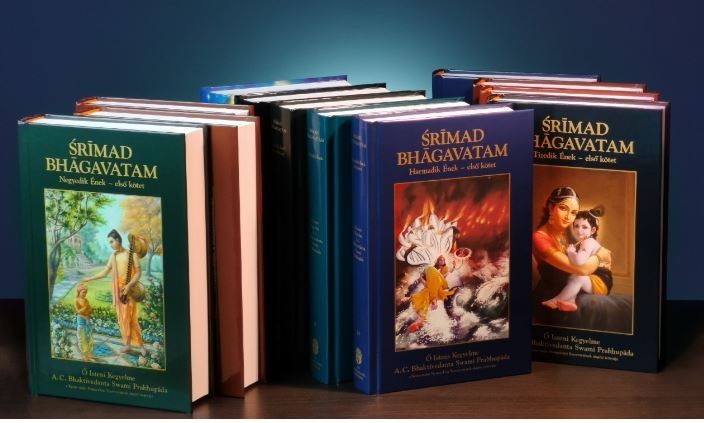
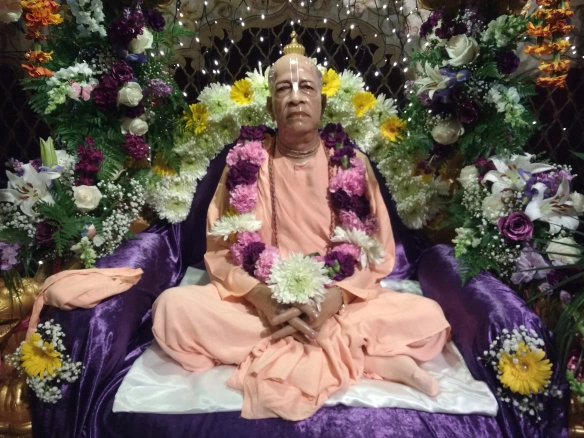
Another simple but powerful method for winter evenings is to read from Srila Prabhupada’s books. As you follow the lines, you may feel as if our teacher were sitting right beside you, his presence radiating calm and peace. When you turn your attention toward Krishna, the inner noise quiets down, and the harmony between body and soul becomes stronger. Thus, the Vata season is supported not only by Ayurvedic nutrition and routine, but also by inner awareness and Krishna consciousness — bringing true inner warmth and tranquility.
🌸 Slow down, warm up, and love yourself!
Ayurveda’s message during this season is very simple: Slow down, warm up, and love yourself! Your body is not your enemy — it’s your best friend; it’s just asking for a little extra attention right now.
🙋 Come visit us!
If you’d like to immerse yourself more deeply in this lifestyle, come visit Krishna Valley — where you can recharge not only your body but also your soul, with warm meals, peaceful surroundings, and lots and lots of love!
Amikor reggel már a paplan alól csak hősies küzdelemmel lehet kimászni, a teád pedig gyorsabban hűl ki, mint ahogy kimondanád, hogy „Brrrr”, akkor biztos lehetsz benne: megérkezett az ősz, és vele együtt a Vata-domináns időszak. Ha nem tudod, mit jelent ez, ne aggódj, elmagyarázom! Ebben az időszakban a hideg, száraz, mozgékony energia kerül túlsúlyba. Magyarul: fázunk, kiszárad a bőrünk, száll a hajunk, és az idegeink is hajlamosak egy kis túlpörgésre.
De a jó hírem az, hogy az ájurvéda szerint mindenre van ellenszer. Ráadásul ez lehet nagyon finom, illatos és kényelmes is!
🥘 1. Egyél meleget, zsírosabbat és puhábbat!
Ez most nem a saláták időszaka. Igen, végre egy indok, hogy kihagyd a jéghideg smoothie-t reggelente! Ősszel és télen a tested vágyik a meleg, olajos, tápláló ételekre. Képzeld el, hogy minden falattal egy kicsit még jobban és jobban éleszteget a belső tüzedet!
A meleg levesek, dhalok, főzelékek, sütőben sült zöldségek most a legjobb barátaid.
Használj bőségesen ghít (tisztított vajat) vagy jó minőségű olívaolajat!
A fűszerek most különösen fontosak lesznek: gyömbér, fahéj, kardamom, szegfűszeg – ezek szó szerint lángra lobbantják az emésztési és belső tüzed.
És ha eddig bűntudatod volt attól, hogy „már megint valami meleg, sűrű ételt kívánsz”, most fellélegezhetsz: büntetés nélkül megteheted, vagyos megeheted. 😉A tested pontosan tudja, mire van szüksége, és most pont ilyen ételekre ad zöld utat.
🕯️ 2. Melegítsd a tested – kívül és belül!
Az ájurvéda szerint a hideg nem csak hőmérséklet, hanem egy minőség. Ezért ne csak a termoszoddal védekezz, hanem az életmódoddal is! Reggelente masszírozd be a bőröd egy kis szezámolajjal, várj egy kicsit, majd vegyél egy meleg zuhanyt! Ez nemcsak puhává teszi a bőrt, de segít méregteleníteni a bőrön keresztül és meg is nyugtatja az idegrendszert!
Este pedig egy forró gyömbéres tea segíthet elengedni a nap feszültségét.
🌙 3. Pihenj, mint egy bölcs mormota!
A hideg hónapokban a természet is visszahúzódik – és bizony, nekünk sem kell minden este hősként éjfélig pörögni. Ha korábban lefekszel, és engeded, hogy a tested regenerálódjon, csodát fogsz tapasztalni. Az alvás ilyenkor gyógyítóbb, mint bármelyik gyógynövényes kapszula. A test ilyenkor dolgozza fel a nap élményeit, feltölti az immunrendszert energiával, és felkészít a másnapra.
Ha pedig a tested nem engedi el könnyen a feszültséget, próbálj ki egy egyszerű, ájurvédikus esti rutint: gyújts gyertyát, kortyolj meleg tejet kardamommal és kurkumával, majd lélegezz mélyeket, és figyeld, ahogy minden belső nyugtalanság és zaj lassan elcsendesül.
☀️ 4. Találj ritmust a napodban!
Ezen időszakban a rendszeresség szó szerint életmentő. A Vata-energia szereti a változatosságot, de ettől válunk szétszórttá, nyugtalanokká. A legjobb, amit tehetsz, hogy megadod a testednek az állandóság biztonságát:
Egyél mindig hasonló időpontban,
Aludj fix órában,
És ha lehet, minden nap szánj időt egy kis énidős befelé figyelésre!
Ez utóbbi lehet egy rövid reggeli meditáció, légzőgyakorlat, vagy egy nyugodt séta a természetben. Krisna-völgy csendes ösvényei és kertjei, parkjai például tökéletes helyszínt kínálnak ehhez.
💙 5. Krisna-tudatos segítség a Vata-időszakban
A hideg, Vata-domináns időszakban a test és az elme hajlamos a nyugtalanságra és a szétforgácsolódásra. Ilyenkor érdemes egy kis Krisna-tudatot csempészni a mindennapokba: Hare Krisna mahá-mantra csendes ismételgetése vagy éneklése segít a belső egyensúly megtartásában.
gy másik egyszerű, de hatásos módszer a téli estéken: olvashatsz Srila Prabhupada könyveiből. Ahogy a sorokat követed, úgy érezheted, mintha tanítónk ott lenne melletted, jelenléte pedig nyugalmat és békét árasztana.Ahogy a figyelmedet a Krisnára irányítod, a belső zaj elcsendesül, és a test-lelki harmónia felerősödik. Így a Vata-időszakot nemcsak az ájurvédikus táplálkozás és rutin támogatja, hanem a belső tudatosság és Krisna-tudat is, ami igazi belső melegséget és nyugalmat hoz.
🌸 Lassíts, melegíts, szeresd magad!
Az ájurvéda üzenete ebben az időszakban nagyon egyszerű: Lassíts, melegíts, és szeresd magad! A tested nem az ellenséged, hanem a legjobb barátod – csak most kicsit több figyelmet kér.
🙋Gyere el hozzánk!
Ha pedig szeretnél mélyebben elmerülni ebben az életmódban, gyere el Krisna-völgybe, ahol nemcsak a testedet, hanem a lelkedet is feltöltheted – meleg ételekkel, csenddel, és sok-sok szeretettel!
A Day Through the Eyes of the Guests at the Krishna Valley Guesthouses
There is a place among the rolling hills of Somogy where mornings begin differently. Instead of the news’ clamour, the sound of birds wakes you up here. Spicy aromas drift from the kitchen, and even the sun rises differently, as if asking for time to properly illuminate this special world.
Let’s take a look at a day through the eyes of the guests at the Krishna Valley Guesthouses!
Morning: peaceful awakening, with aromas
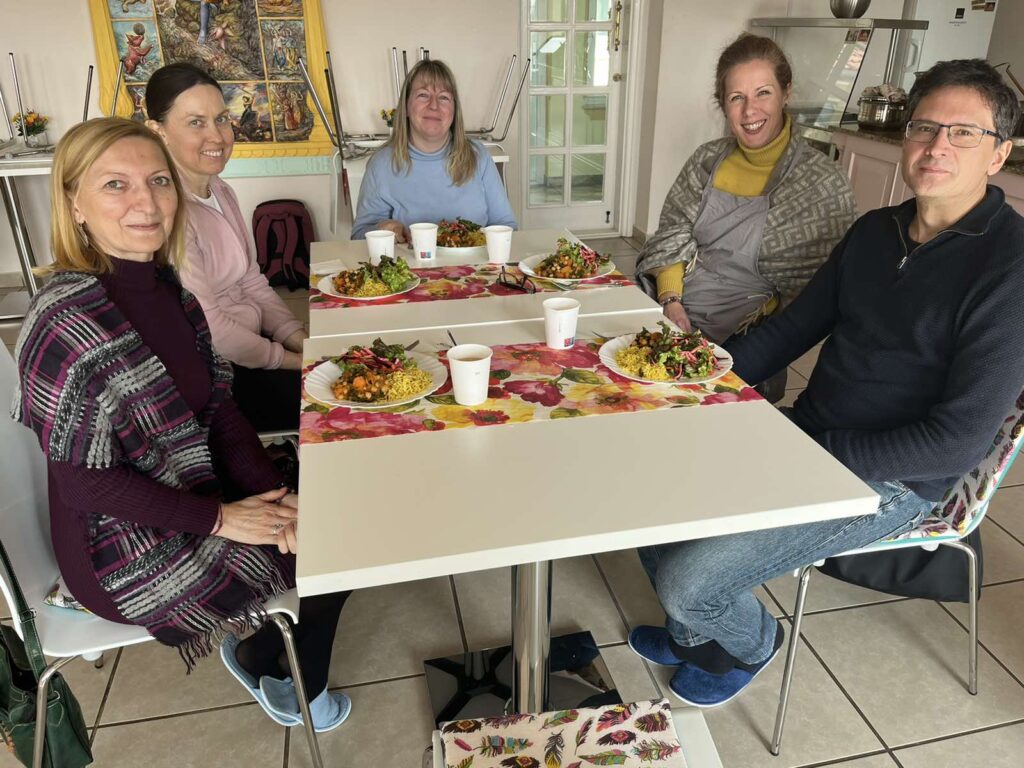
The visitors are waking up under warm blankets in the guest rooms. The breakfast is fresh, warm, and the same as what the monks eat—sharing a table as part of the community. One guest wrote: “What I loved about the breakfast was that it’s the same as the monks’—no difference at all.” I loved being there. “A fantastic place, with fantastic energy, and friendly, helpful devotees.”
Morning: Encounters and Exploration
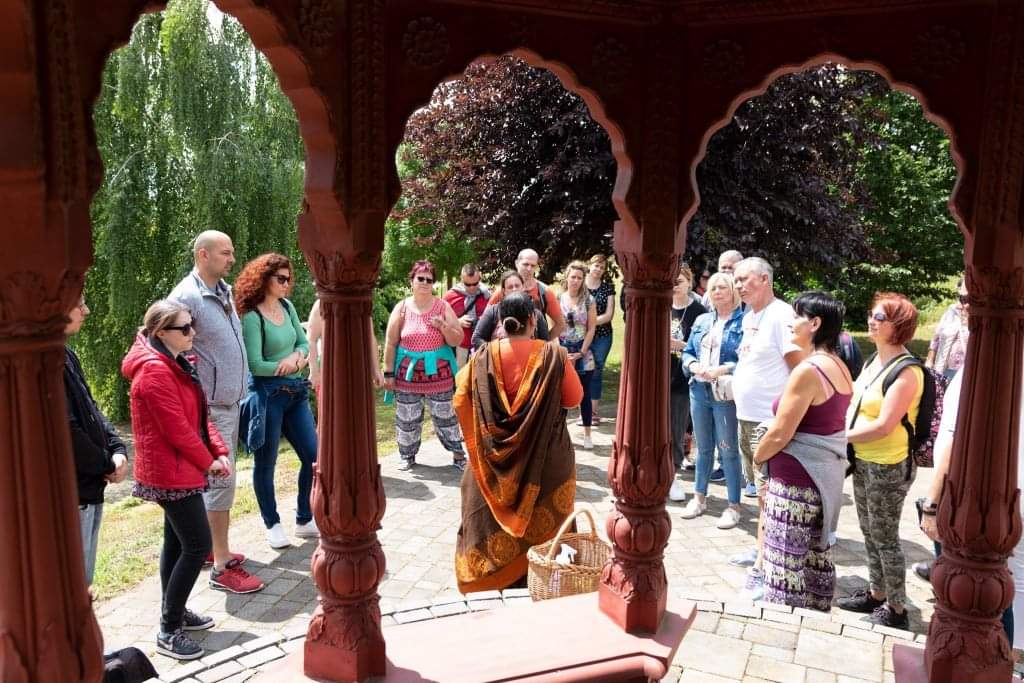
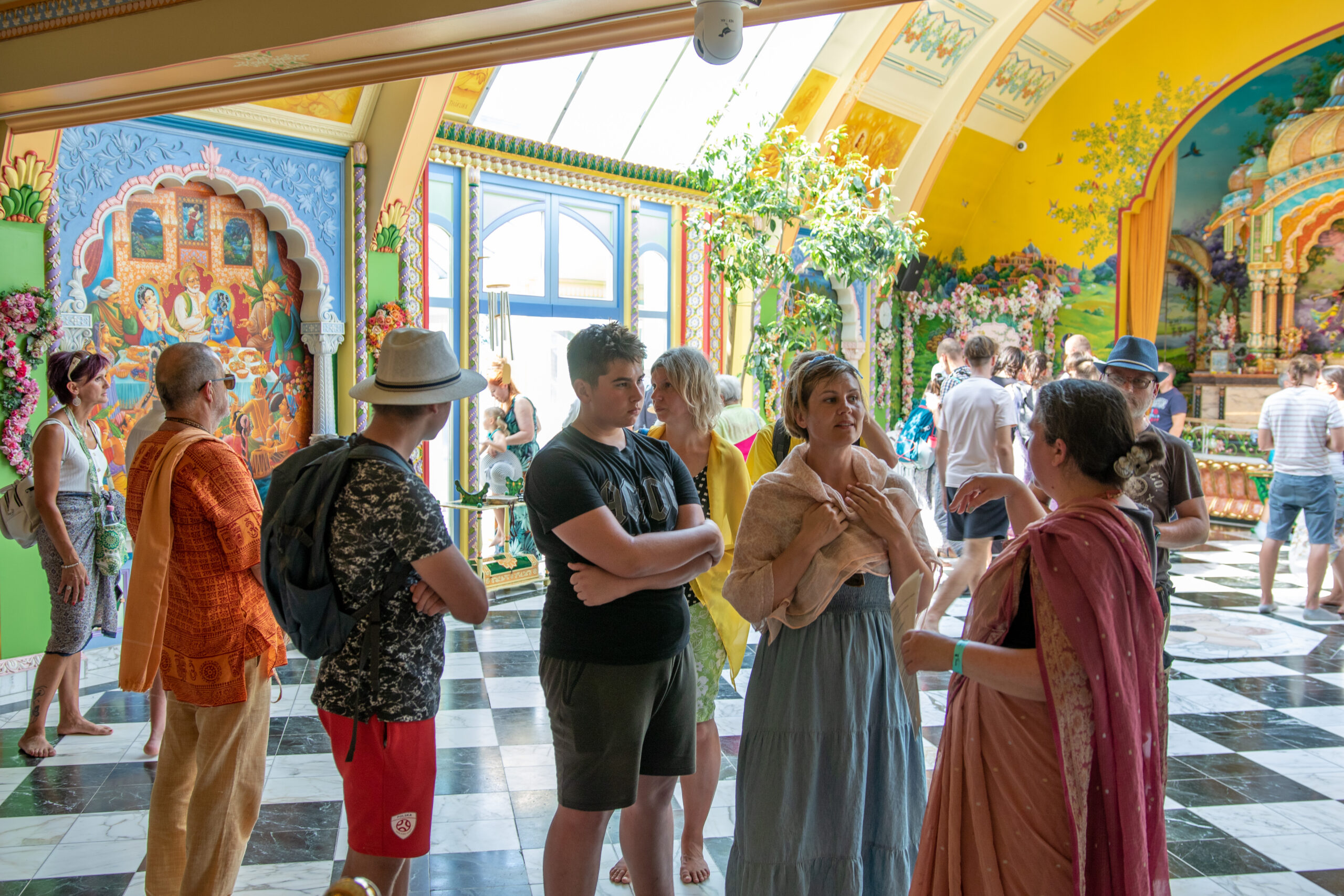
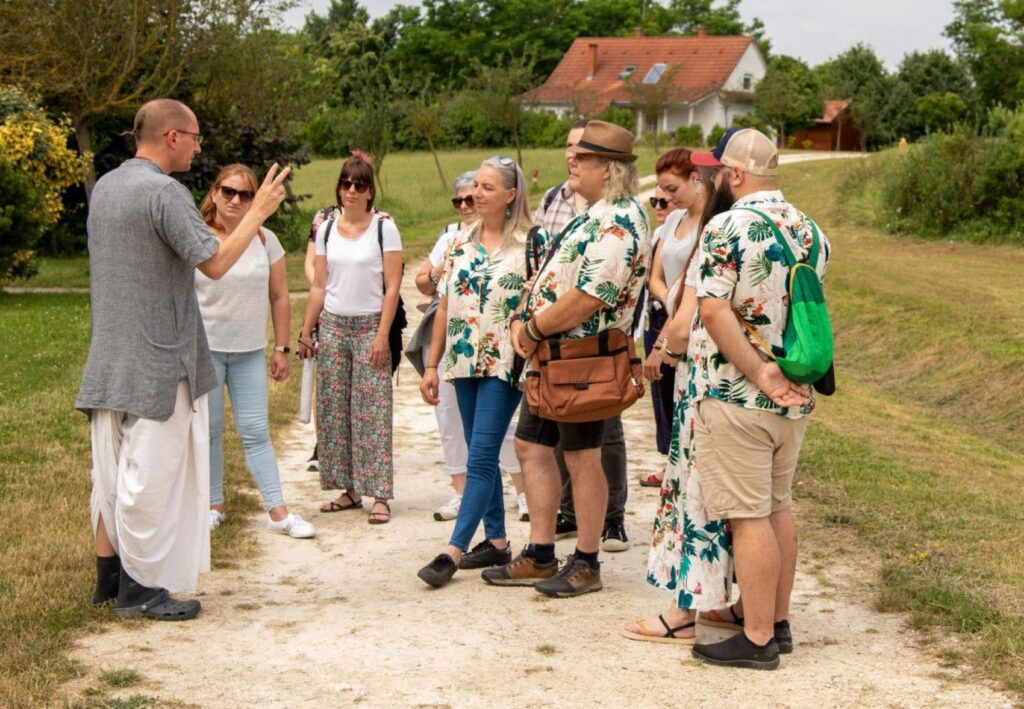
In the late morning, many people visit the temple, while others tour the garden or go for a quiet walk on the hills. It’s not just the scenery that is stunning here, but also the people—they approach you with sincere focus.
“Everyone was very open, kind, accepting, and helpful!” “I received very helpful answers to my questions, and I would like to meet them again on my next visit.”
Lunchtime: Tastes to Nourish Body and Spirit
Lunch is not merely a meal. The food here has a soul, and so does the hospitality.
“I am once again very grateful for the clean, peaceful, warm accommodation, and for the food, which once again stole all my senses.” “I had the chance to spend another fantastic 4 days with you, for which I’m also very thankful.”
Afternoon: Relaxation, Quiet, and Introspection
Some retreat to a bench to read, while others settle into a shady corner of the guesthouse. The sunlight is softer at this time, and the air grows still.
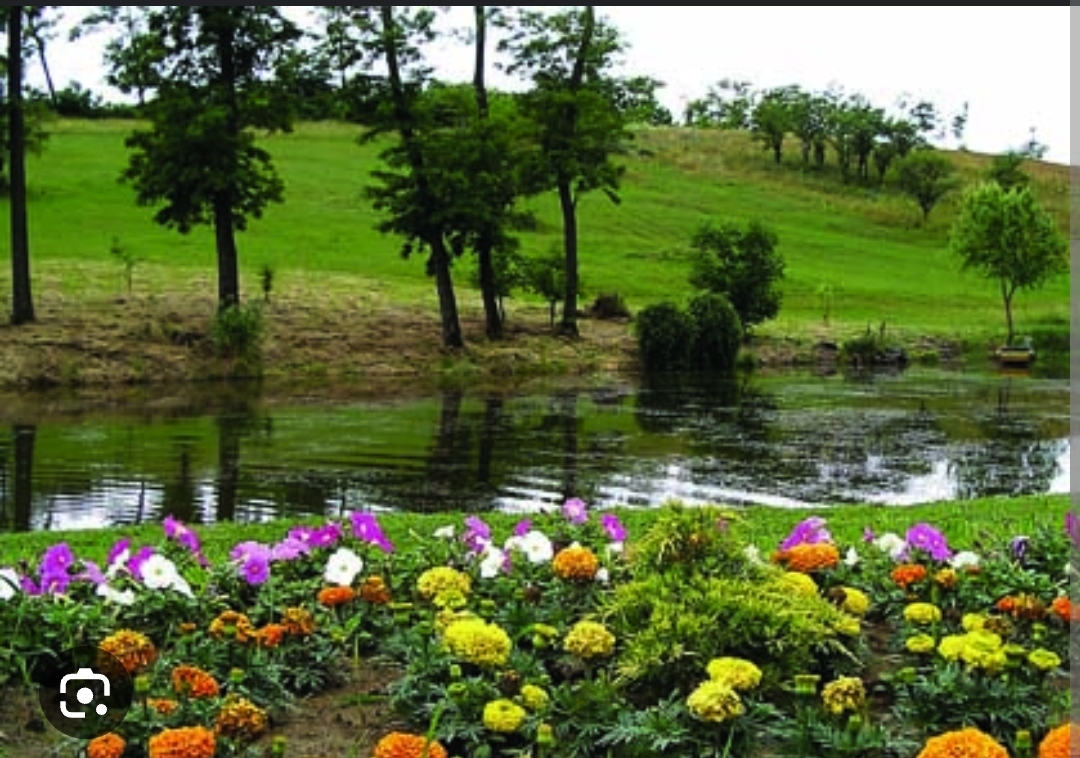
“The surroundings are stunning, a heaven on earth.” “The flowers and the aromas accompanied us everywhere; we almost couldn’t get enough of them.” “A piece of India in Hungary—enchanting for us.”
Evening: Serenity, Gratitude, and Departure
The evenings grow quiet, and the silence has a presence—not a heavy one, but a comforting caress. Guests often feel that something inside them has changed.
“I would like to express my gratitude for everything I’ve gained! For the opportunity to see into your lives, as you guided me with such pure love and sincerity. I am grateful for my conversation with the monk, it was very uplifting.”
And when it is time for departure…
Most find it hard to start their journey back. Some long to return even from the train station.
“If I just write that upon leaving the Somogyvár train station, I would rather have turned back toward the valley, I think I’ve said everything.”
Just one day – yet a fresh start for countless people
The Krishna Valley Guesthouses are more than just a place to stay. It is a sanctuary in the chaotic world, where people can rediscover presence, mindfulness, and thankfulness. And we’re not the ones saying this—it’s those who have already visited.
“A wonderful place with wonderful people.” “If you love nature, tranquility, and silence, this is where you belong.”
Some visit for a day, others for a week, but most take something with them from here that lasts a lifetime. A fregrence. A smile. A feeling that “it was wonderful being here.” If you also yearn for this tranquility, you know where to go… We look forward to seeing you!
Should you have any questions, don’t hesitate to reach out to our team!
Don’t miss this unique opportunity to spend a few days close to nature, in an authentic, spiritual community, where you can experience your inner peace!
The Deeper Meanings and Timing of Vaishnava Festivals
If you want to deeply experience spiritual festivals throughout the year, the communities of Krishna Valley and the Budapest temple warmly welcome you. These festivals are not just traditions—they are opportunities to experience a higher-quality, joyful life filled with intimate connections, while also immersing yourself in the rhythm of nature and ancient Indian culture. Let’s take a look at these special days, which we honor in Krishna Valley and at the Budapest temple with communal singing (kīrtana), ritual bathing (abhisheka), and festive feasts.
Let’s take a brief look at each of the festivals together!
The Main Vaishnava Festivals
Ekādaśī
Ekādaśī are biweekly fasting and spiritual purification days according to the lunar calendar, which are favorable for meditation, chanting, and other spiritual practices. During this time, it is easier to find inner quiet and develop a deeper connection with Krishna.
Gaura Pūrṇimā
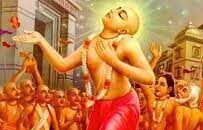
Gaura Pūrṇimā is one of the most important days for Vaishnavas (Krishna devotees), celebrating the appearance of Śrī Caitanya Mahāprabhu, the incarnation who spread the love of Krishna. According to the lunar calendar, it falls on the full moon day of the Phālguna month (around March in the Gregorian calendar). At this time, in Krishna Valley and the Budapest temple, we remember Lord Caitanya, experiencing the power of community and the spiritual joy He brought into the world.
The Appearance of Lord Varāha Deva
The appearance of Lord Varāha Deva (on the Trayodaśī day of the Māgha or Phālguna month according to the lunar calendar, around January–February) celebrates the divine boar incarnation, in which Lord Krishna takes the form of a boar to rescue the Earth (Bhūmi Devi) from the depths of the ocean after it was abducted by a demon. This incarnation symbolizes the protection of nature and the universe, and reminds us that divine power is always present to uphold justice and protect the righteous.
Śrī Śrī Dayāl-Nitāi Apperance Festival
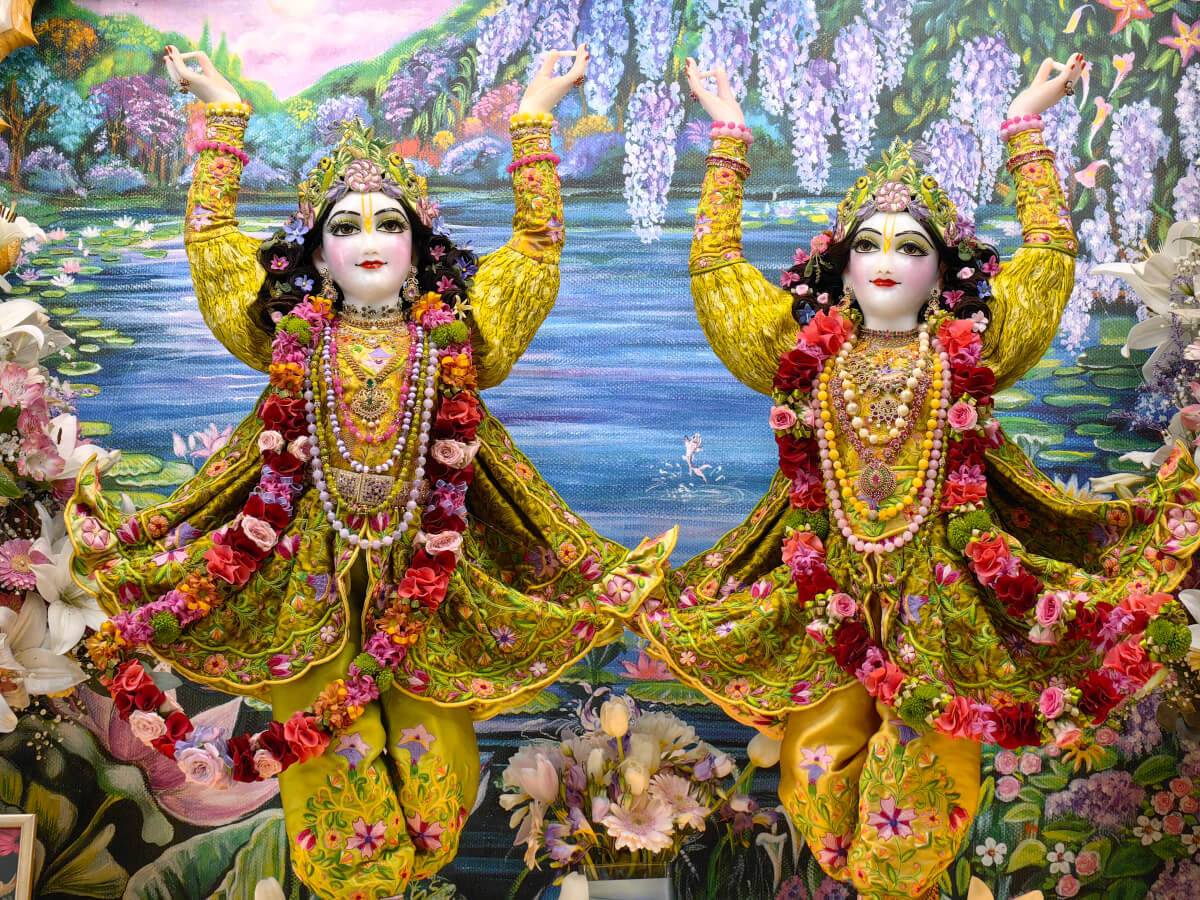
The Śrī Śrī Dayāl-Nitāi Apperance Festival (the anniversary of the installation of the murtis) in Budapest usually falls in mid to late February, during the Krishna Pakṣa (waning moon) of the Magha or Phālguna month according to the lunar calendar. It can fall on the 10th or 11th day (Dvādaśī or Ekādaśī). This festival brings communal joy, collective singing (kīrtan), and colorful programs, celebrating the installation of the murtis in the temple, which marks the beginning of their spiritual presence.
Rāma Navamī
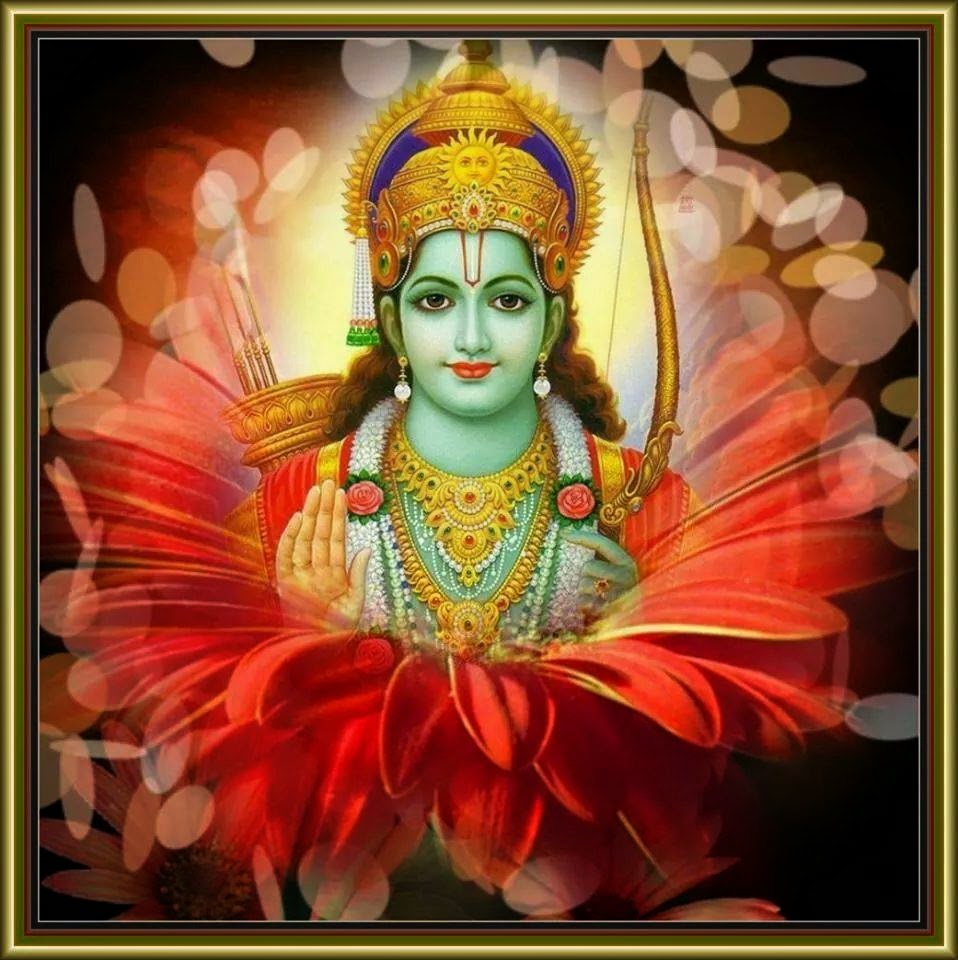
Rāma Navamī (March–April, on the Navamī day of Shukla Paksha in the Chaitra month according to the lunar calendar) celebrates the appearance of Lord Rāmacandra, the ideal king and embodiment of dharma. He is an exemplar of justice, courage, and duty, who brought peace and harmony to the world by defeating evil forces.
Nṛsiṁha Caturdaśī
Nṛsiṁha Caturdaśī (around May, on the Caturdaśī day of Shukla Pakṣa in the Vaiśākha month according to the lunar calendar) marks the appearance of Lord Nṛsiṁhadeva, who appeared in a half-lion, half-human form to protect His devotees and destroy evil, providing safety and security to the faithful in all situations.
Ratha Yātrā
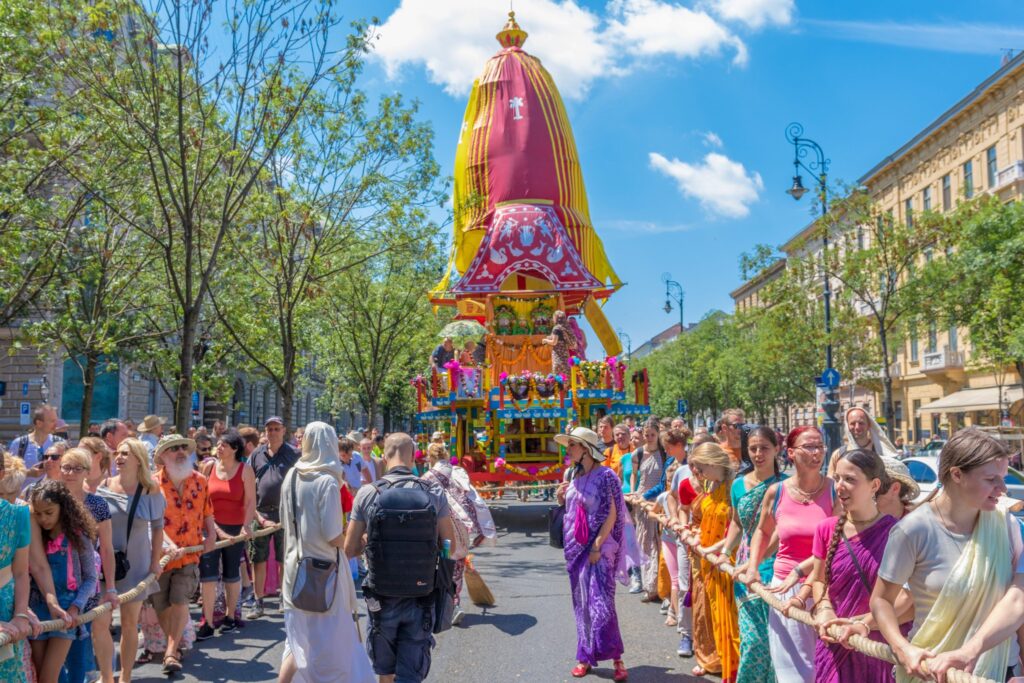
Ratha Yātrā (June–July, in Budapest, usually on the Dvitīyā or Tṛtīyā day of Shukla Paksha in the Āṣāḍha month according to the lunar calendar) is the famous Chariot Festival, when Lord Jagannātha (a form of Kṛṣṇa), Baladeva (Balarāma, Kṛṣṇa’s brother), and Subhadrā (their sister—together representing the divine family and the bond of spiritual love) are paraded through the city on a massive chariot.
During the festival, the path in front of the chariot is ceremonially swept clean before the devotees, while singers and dancers accompany the procession. Everyone can participate in pulling the chariot ropes, which brings spiritual blessings and purification. The procession continues in Városliget, where visitors can enjoy a full day of programs, a market, cultural performances, and a vegetarian feast, creating an authentic Indian festival atmosphere in the heart of Budapest.
Balarāma Pūrṇimā
Balarāma Pūrṇimā (August, usually on the full moon day of the Śrāvaṇa month according to the lunar calendar) The appearance day of Balarāma, Kṛṣṇa’s elder brother. Balarāma, the elder brother of Kṛṣṇa, is a symbol of strength and service, supporting and assisting Kṛṣṇa in all His spiritual and earthly missions. His appearance is a celebration of pure devotion and inner strength, reminding us that on the spiritual path we need both inner power and humble service.
Janmāṣṭamī
Janmāṣṭamī (August–September, usually on the Aṣṭamī day of Kṛṣṇa Pakṣa in the Bhādrapada month according to the lunar calendar) Krishna’s birthday, the most joyous festival of the year, celebrates the appearance of the Supreme Lord, who brings joy and spiritual knowledge to the world.
Rādhāṣṭamī
Rādhāṣṭamī (August–September, on the Aṣṭamī day of Śukla Paksha in the Bhādrapada month) is the birthday of Śrīmatī Rādhārāṇī, Krishna’s eternal companion and the supreme example of devotional service.
Appearance of Vāmanadeva
The appearance of Vāmana Deva (September, on the Dvādaśī day of Śukla Pakṣa in the Bhādrapada month) is a celebration of humility, when Vāmana Deva (an incarnation of Kṛṣṇa) conquered the universe in three steps, demonstrating the power of divine grace.
Rāmacandra Vijayotsava
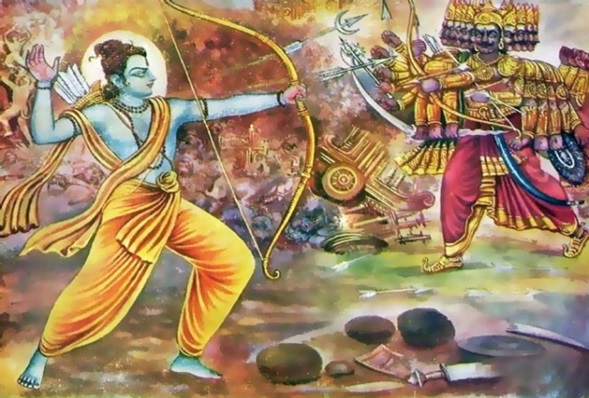
Rāmacandra Vijayotsava (October, usually on the Daśamī day of Śukla Pakṣa in the Āśvina month) is the celebration of Lord Rāma’s victory over the demon Rāvaṇa, proclaiming the triumph of good over evil.
Go-pūjā, Govardhana-pūjā
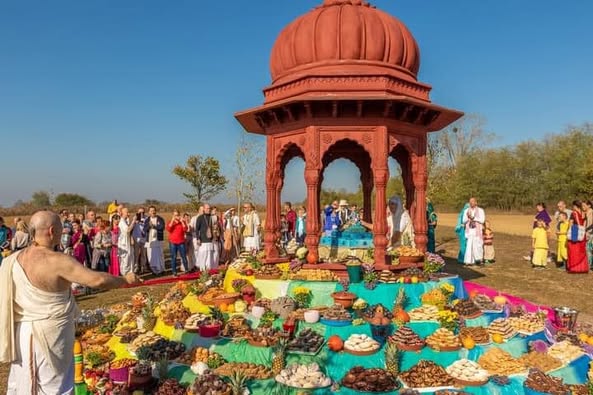
It falls in October–November, on the Pratipadā day of Śukla Pakṣa in the Kartika month, celebrating the time when Krishna lifted the Govardhana Hill to protect His devotees, and honoring cow protection and respect for nature. On this day, the altar is decorated with mountains of sweets and various delicacies, recalling the lifting of Govardhana Hill and divine care.
Kārtika Month
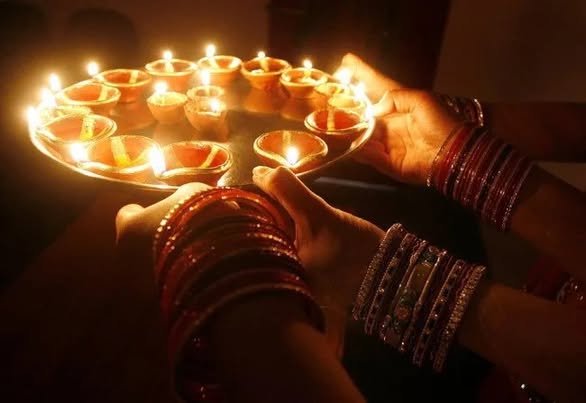
Kārtika Month (October–November, the Kārtika month, which usually lasts from the day after Śārad Pūrṇimā full moon to the next full moon according to the lunar calendar) is the month of lamp lighting and daily chanting, especially favorable for deepening spiritual life, inner purification, and strengthening one’s connection with Krishna.
Gītā-jayantī
Gītā-jayantī (December, on the Ekādaśī day of Śukla Pakṣa in the Mārgaśīrṣa month) is the celebration of the appearance of the Bhagavad-gītā, when Lord Kṛṣṇa imparted this sacred knowledge to Arjuna on the battlefield of Kurukṣetra.
Appearance and Disappearance Days of Saints
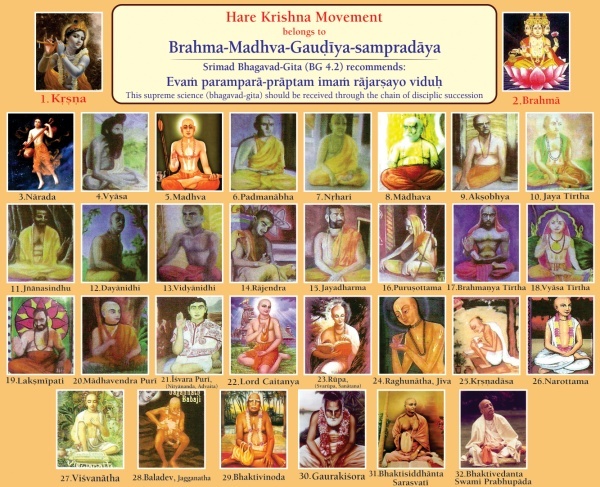
In the Vaishnava tradition, on the appearance and disappearance days of saints—such as Śrī Advaita Ācārya, Śrīla Bhaktivinoda Ṭhākura, Śrīla Prabhupāda, Gaura Kiśora dāsa Bābājī, and Śrīla Bhaktisiddhānta Sarasvatī Ṭhākura—lectures and kīrtans are held in remembrance of their teachings and exemplary lives, which inspire those walking the spiritual path. On these days, devotees recall with gratitude and respect the legacy of the masters of the Vaishnava tradition, strengthening their connection to the guru-paramparā and the spiritual unity of the community.
Other frequently celebrated Vaishnava saints include Śrī Rūpa Gosvāmī, Śrī Sanātana Gosvāmī, and Śrīla Narottama dāsa Ṭhākura, who are also commemorated by Vaishnavas on their appearance and disappearance days.
Vyāsa-pūjā – The Festival of Spiritual Teachers
In the Vaishnava tradition, every spiritual teacher, or Guru Mahārāja, has their own transcendental appearance or disappearance day, on which disciples remember them with gratitude and love, honoring their exemplary life and teachings.
In parallel, there is Vyāsa-pūjā / Guru Purnima, which is dedicated to honoring the entire guru-paramparā, the sacred lineage of spiritual teachers. It takes place on the full moon day (Pūrṇimā) of the Āṣāḍha month, which falls in June–July, and is observed especially in gratitude to Śrī Vyāsadeva, the source of the Vedas and all spiritual knowledge.
Other Krishna Valley and In-house Programs:
Happy Cow Festival (May) – a celebration of cow protection. Holi (March) – a festival filled with colorful powders and music. Búcsú (July) – the largest event in Krishna Valley. Krishna Valley Cavalcade, Magic of India, Thematic Days Throughout the Year Sankirtan Festival on New Year’s Eve (Budapest) – communal singing and chanting.
The Spiritual Benefits and Messages of the Festivals
Vaishnava festivals are not merely traditions or colourful events, but profound spiritual opportunities. Each appearance or disappearance day, each festival is an invitation to deepen our devotion, purify ourselves, and connect with the Supreme. The message of the festivals is to live selfless love, humility, and inner peace, which help us maintain spiritual balance and joy even amidst the challenges of everyday life.
How should we prepare for the festivals?
Spiritual and physical preparation for the festivals is an important part of deepening the spiritual experience. It may be worthwhile to incorporate fasting, chanting, and meditation in the days leading up to the festival to purify both body and mind. Clothing and outward appearance also reflect inner purity – traditionally, we wear light and clean garments. Participation in the community, through kīrtans and shared meals, enriches the festival experience, fostering a deeper connection among participants and with Krishna.
Volunteering oppertunities
In Krishna Valley and at the Budapest temple, the organization and execution of the festivals become truly special with the help of many volunteers. Volunteering is not only a way to support the community, but also an opportunity for personal spiritual growth. If you would like to take part in this wonderful work, you can contribute to festival preparations, welcoming guests, or organizing cultural programs. This is a wonderful opportunity to build relationships and engage in spiritual service.
These festivals are sources of unity, spiritual renewal, and profound joy. We warmly welcome you to Krishna Valley and our programs in Budapest to experience true spiritual enrichment together!
HEALTH, ENVIRONMENTAL PROTECTION AND CONSCIOUSNESS ALL IN ONE
In recent years, more and more people have been showing interest in plant-based eating, and many are curious about what impact it could have on their lives, even if they try a vegan diet only for a short period of time. The essence of vegan nutrition is that it completely excludes animal-derived ingredients: not only that it doesn’t contain meat, but also no dairy products, eggs, or other foods of animal origin.
Health and Lightness
A plant-based diet is easy to digest and full of fiber, vitamins, and minerals.
Many people report feeling more energetic and refreshed, and that their digestion improves. A plant-based diet can help balance body weight, stabilize blood sugar levels, and also support cardiovascular health. Thanks to lighter digestion, many people experience less fatigue and greater vitality in their daily lives.
Environmental Protection and Sustainability
Choosing a vegan diet not only has a positive effect on an individual’s health but also helps protect the planet. Animal farming requires enormous amounts of water and feed, and it also contributes significantly to greenhouse gas emissions. In contrast, producing plant-based foods has a much smaller ecological footprint. Those who consume more plant-based foods reduce water and land use and contribute to the preservation of natural resources. Those who consume more plant-based foods reduce water and land use and contribute to the preservation of natural resources. With such a conscious choice, we not only protect the planet’s resources but also contribute to mitigating climate change and creating a more livable future for everyone.
Compassion and Consciousness
Behind vegan nutrition, there is often a deeper conviction: compassion for all living beings. Giving up meat and animal products is a conscious choice that expresses respect for the sanctity of life. This lifestyle helps us live in harmony not only with our body but also with our soul, as the principle of non-violence (ahimsā) is one of the most important spiritual foundations. Those who eat this way not only take care of their own health but also of the world as a whole: they cause less suffering to animals, protect nature, and develop a more conscious relationship with food. A vegan or vegetarian lifestyle is thus also a path of inner growth, connecting the body, mind, and soul.
What do Krishna devotees eat – and what don’t they eat?
Krishna devotees follow a strict vegetarian diet, completely excluding meat, fish, and eggs. In addition, they avoid consuming alliums—such as onions, garlic, and leeks—because, according to tradition, these negatively affect the mind and can disturb meditation and spiritual practices.
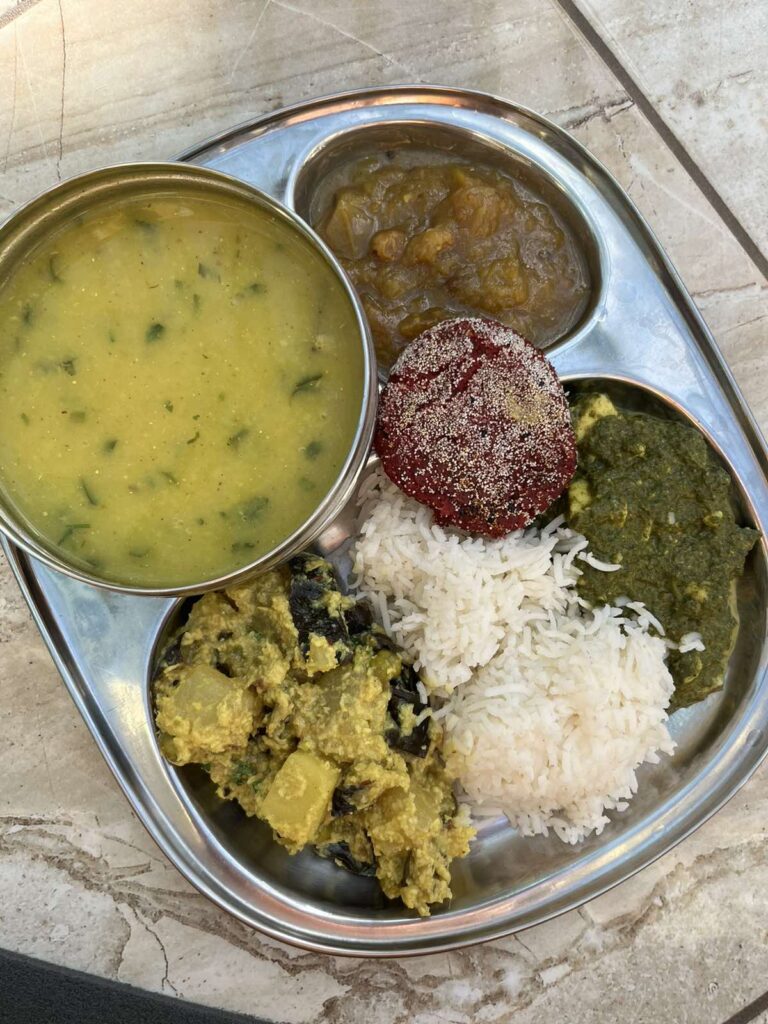
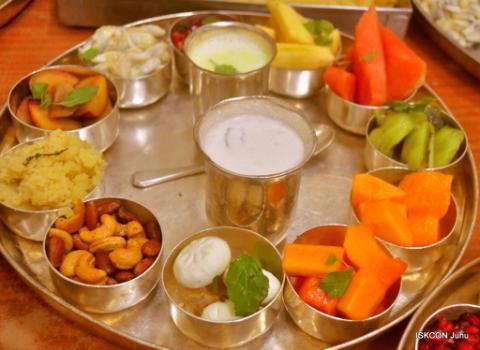
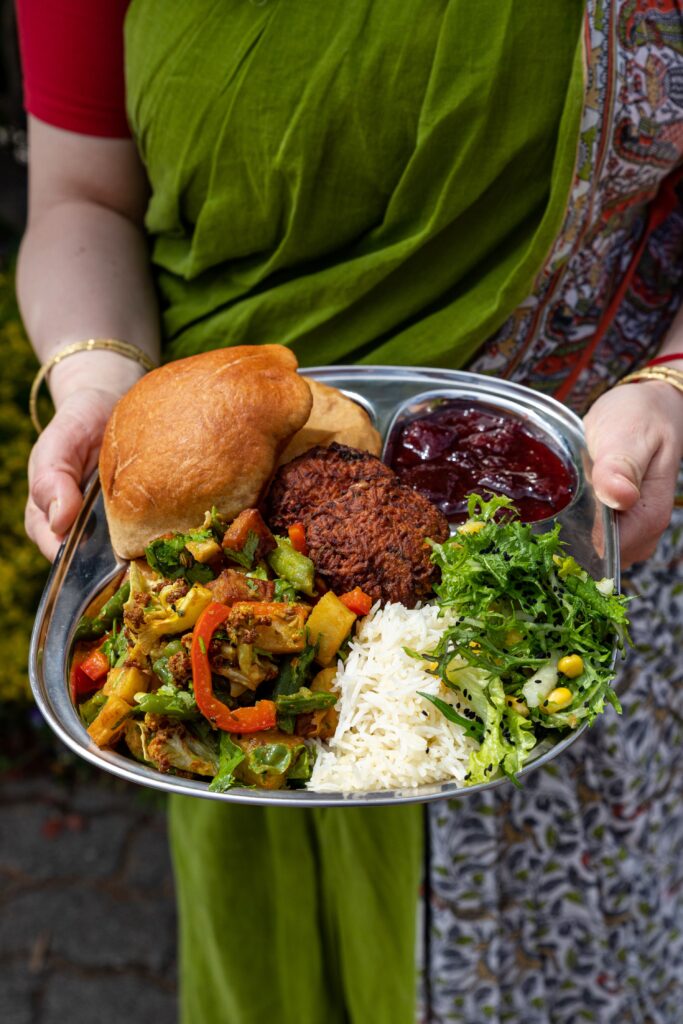
The foundation of their meals consists of fresh vegetables, fruits, grains, legumes, nuts, and various spices. Our culinary art is varied and flavorful: we prepare hearty vegetable main dishes, delicious sauces, freshly baked breads (such as chapati), fragrant rice dishes, and a wide range of desserts.
A special feature is that every dish is prepared with love and a pure heart, and then offered to Krishna. Only after this offering do we eat, so the meal becomes not just physical nourishment but also a spiritual experience and a connection with the Divine.
A Taste of the Spiritual Kitchen
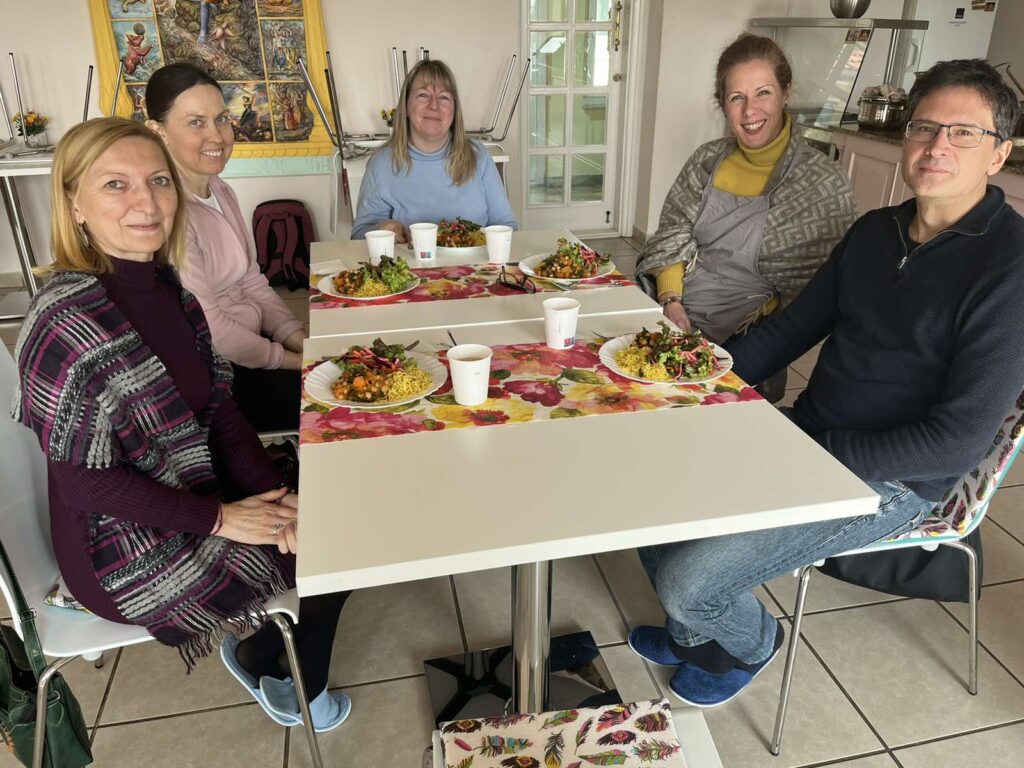
If you’d like to taste food prepared by Krishna devotees, visit the Govinda Restaurant, located in the heart of Krishna Valley! Here, you will always find fresh, flavorful, and nourishing vegetarian dishes. The dishes are not only delicious but also carry a special energy, as they are prepared with an offering.
The Govinda Restaurant is an ideal place to explore the variety of plant-based cuisine, while experiencing the peaceful, spiritual atmosphere of Krishna Valley and enjoying the comfort of our guesthouses.
Taste Consciousness at Govinda in Krishna Valley!
Trying a vegan or vegetarian diet can bring not only physical and mental refreshment but also guide you toward a more conscious and compassionate lifestyle. At the Govinda Restaurant in Krishna Valley, you can experience all of this in practice—with fresh, delicious, lovingly prepared meals in a unique, spiritual environment.
Come visit us!
If you’d like to experience and try the benefits of a vegan diet up close, book a room at the Krishna Valley Guesthouses and spend a few days on the farm! At the Govinda Restaurant, everything is provided for you to taste fresh, delicious plant-based meals, while the spiritual environment and ancient wisdom help you rediscover your inner balance and harmonize with yourself and nature.
EGÉSZSÉG, KÖRNYEZETVÉDELEM ÉS TUDATOSSÁG EGY TÁNYÉRBAN
Az utóbbi években egyre többen érdeklődnek a növényi alapú étkezés iránt, és sokan kíváncsiak arra, vajon milyen hatással lehet az életükre, ha akár csak egy rövid időre is kipróbálják a vegán étrendet. A vegán táplálkozás lényege, hogy teljes mértékben mellőzi az állati eredetű alapanyagokat: nemcsak a húst, hanem a tejtermékeket, tojást és más állati eredetű élelmiszereket sem tartalmazza.
Egészség és könnyedség
A növényi étrend könnyen emészthető, tele van rostokkal, vitaminokkal és ásványi anyagokkal. Sokan számolnak be arról, hogy energikusabbnak, frissebbnek érzik magukat, és javul az emésztésük. A növényi alapú étkezés segíthet a testsúly kiegyensúlyozásában, a vércukorszint stabilizálásában, és támogatja a szív- és érrendszer egészségét is. A könnyedebb emésztésnek köszönhetően sokan kevesebb fáradtságot és nagyobb vitalitást tapasztalnak a mindennapokban.
Környezetvédelem és fenntarthatóság
A vegán étrend választása nemcsak az egyén egészségére van jó hatással, hanem a bolygót is kíméli. Az állattenyésztés hatalmas mennyiségű vizet és takarmányt igényel, valamint jelentős mértékben hozzájárul az üvegházhatású gázok kibocsátásához. Ezzel szemben a növényi alapú élelmiszerek előállítása sokkal kisebb ökológiai lábnyommal jár. Aki több növényi ételt fogyaszt, az csökkenti a víz- és földhasználatot, valamint hozzájárul a természeti erőforrások megőrzéséhez. Így minden egyes vegán fogás nemcsak a saját jólétünket, hanem a jövő generációk élhető környezetét is szolgálja. Egy ilyen tudatos választással nemcsak a bolygó erőforrásait óvjuk, hanem hozzájárulunk a klímaváltozás mérsékléséhez és egy élhetőbb jövő kialakításához mindenki számára.
Együttérzés és tudatosság
A vegán táplálkozás mögött sokszor mélyebb meggyőződés áll: az együttérzés minden élőlény iránt. A hús- és állati termékek elhagyása egy tudatos döntés, amely tiszteletet fejez ki az élet szentsége iránt. Ez az életmód segít abban, hogy ne csak a testünkkel, hanem a lelkünkkel is harmóniában éljünk, hiszen az erőszakmentesség elve (ahimszá) az egyik legfontosabb spirituális alapelv. Aki így étkezik, az nemcsak saját egészségére figyel, hanem a világ egészére is: kevesebb szenvedést okoz az állatoknak, kíméli a természetet, és tudatosabb kapcsolatot alakít ki az étellel. A vegán vagy vegetáriánus életmód tehát egy belső fejlődés útja is, amely összekapcsolja a testet, a tudatot és a lelket.
Mit esznek – és mit nem – a Krisnások?
A Krisna-hívők szigorúan vegetáriánus étrendet követnek, amelyből teljesen kizárják a húst, a halat és a tojást. Emellett kerülik a hagymafélék – például a vöröshagyma, fokhagyma, póréhagyma – fogyasztását is, mivel ezek a hagyomány szerint kedvezőtlenül hatnak a tudatra, és megzavarhatják a meditációt, valamint a lelki gyakorlatokat.
Étkezéseink alapját a friss zöldségek, gyümölcsök, gabonák, hüvelyesek, olajos magvak és különféle fűszerek adják. A konyhaművészetünk változatos és ízletes: készítünk gazdag zöldséges főételeket, ínycsiklandó szószokat, frissen sült kenyérféléket (például csapátit), illatos rizses fogásokat és sokféle édességet is.
Különlegesség, hogy minden ételt szeretettel és tiszta szívvel készítünk el, majd felajánljuk Krisnának. Csak ezt követően fogyasztjuk el, így az étkezés nem pusztán testi táplálék, hanem lelki élmény és kapcsolat is az Istenséggel.
Ízelítő a lelki konyhából
Ha szeretnéd megkóstolni, milyen is egy Krisna-hívők által készített étel, látogass el a Krisna-völgy szívében található Govinda Étterembe! Itt mindig friss, ízletes és tápláló vegetáriánus fogások várnak. Az ételek nemcsak finomak, hanem különleges energiával is bírnak, hiszen felajánlással készülnek.
A Govinda Étterem ideális hely arra, hogy megismerkedj a növényi konyha változatosságával, miközben megtapasztalod a Krisna-völgy békés, lelki hangulatát, és vendégházaink kényelmét élvezheted.
Kóstold meg a tudatosságot a Krisna-völgyi Govindában!
A vegán és vegetáriánus táplálkozás kipróbálása nemcsak testi-lelki felfrissülést hozhat, hanem egy tudatosabb, együttérzőbb életmód felé is elindíthat. A Krisna-völgyi Govinda Étteremben pedig mindezt a gyakorlatban is megtapasztalhatod – friss, ízletes és szeretettel készült ételekkel, egy különleges, lelki környezetben.
Gyere el hozzánk!
Ha szeretnéd közelebbről megtapasztalni, kipróbálni a vegán étkezés előnyeit, foglalj szobát a Krisna-völgy Vendégházakba és tölts el pár napot a farmon! A Govinda étteremben minden adott, hogy friss, ízletes növényi alapú ételeket kóstolj meg, miközben a lelki környezet és az ősi bölcsességek segítenek újra megtalálni belső egyensúlyodat, és harmóniába kerülni önmagaddal és a természettel.